
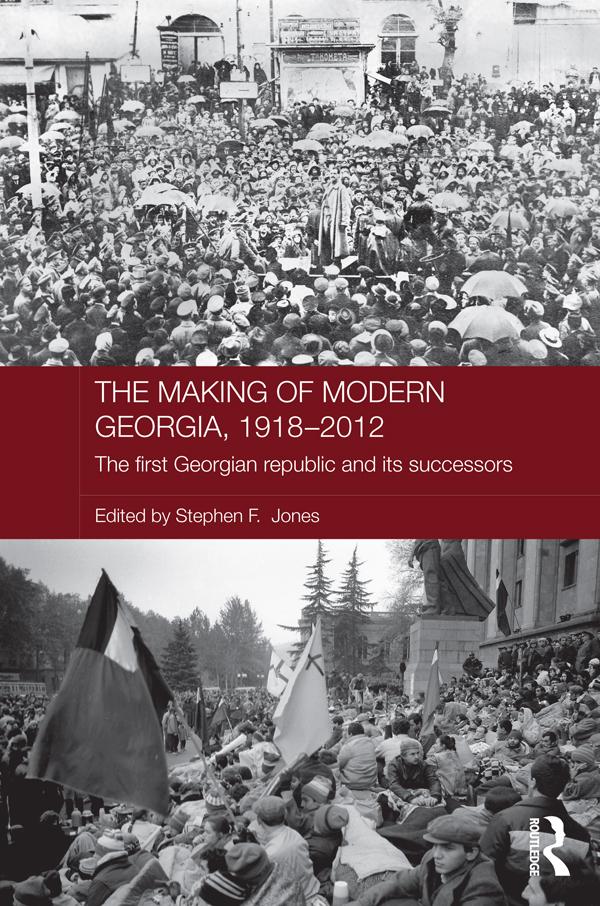
When most of Eastern Europe was struggling with dictatorships of one kind or another, the Democratic Republic of Georgia (1918-1921) established a constitution, a parliamentary system with national elections, an active opposition, and a free press. Like the Democratic Republic of Georgia in 1918, its successors emerged after 1991 from a bankrupt empire, and faced, yet again, the task of establishing a new economic, political and social system from scratch. In both 1918 and 1991, Georgia was confronted with a hostile Russia and followed a pro-Western and pro-democratic course. The top regional experts in this book explore the domestic and external parallels between the Georgian post-colonial governments of the early twentieth and twenty-first centuries. How did the inexperienced Georgian leaders in both eras deal with the challenge of secessionism, what were their state building strategies, and what did democracy mean to them? What did their electoral systems look like, why were their economic strategies so different, and how did they negotiate with the international community neighbouring threats. These are the central challenges of transitional governments around the world today. Georgia’s experience over one hundred years suggests that both history and contemporary political analysis offer the best (and most interesting) explanation of the often ambivalent outcomes.
Pay easily by card, Klarna, Apple Pay or Google Pay. Not happy? You always have a 14-day money-back guarantee. Read more in our terms. If you have any questions, email us at hello@memmo.org.
Memmo makes studying easier – wherever you are in the world. We bring your course books and smart study tools together in one place: summaries, quizzes, podcasts and flashcards. Plus Ted, your study buddy who answers anything you wonder. Over 50,000 students already study here – built to help you learn faster and stress less.