
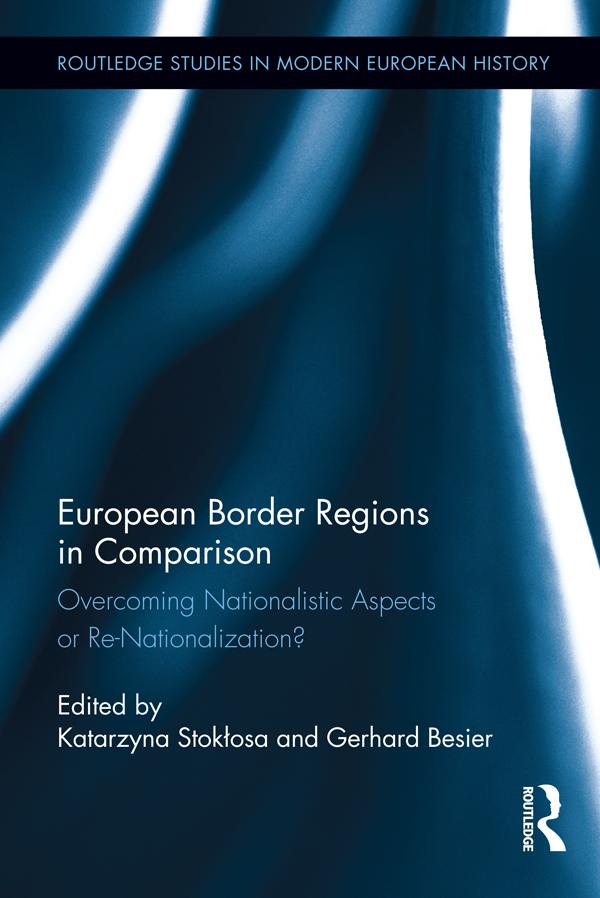
Borders exist in almost every sphere of life. Initially, borders were established in connection with kingdoms, regions, towns, villages and cities. With nation-building, they became important as a line separating two national states with different “national characteristics,” narratives and myths. The term “border” has a negative connotation for being a separating line, a warning signal not to cross a line between the allowed and the forbidden. The awareness of both mental and factual borders in manifold spheres of our life has made them a topic of consideration in almost all scholarly disciplines – history, geography, political science and many others. This book primarily incorporates an interdisciplinary and comparative approach. Historians, sociologists, anthropologists and political science scholars from a diverse range of European universities analyze historical as well as contemporary perceptions and perspectives concerning border regions – inside the EU, between EU and non-EU European countries, and between European and non-European countries.
Pay easily by card, Klarna, Apple Pay or Google Pay. Not happy? You always have a 14-day money-back guarantee. Read more in our terms. If you have any questions, email us at hello@memmo.org.
Memmo makes studying easier – wherever you are in the world. We bring your course books and smart study tools together in one place: summaries, quizzes, podcasts and flashcards. Plus Ted, your study buddy who answers anything you wonder. Over 50,000 students already study here – built to help you learn faster and stress less.