
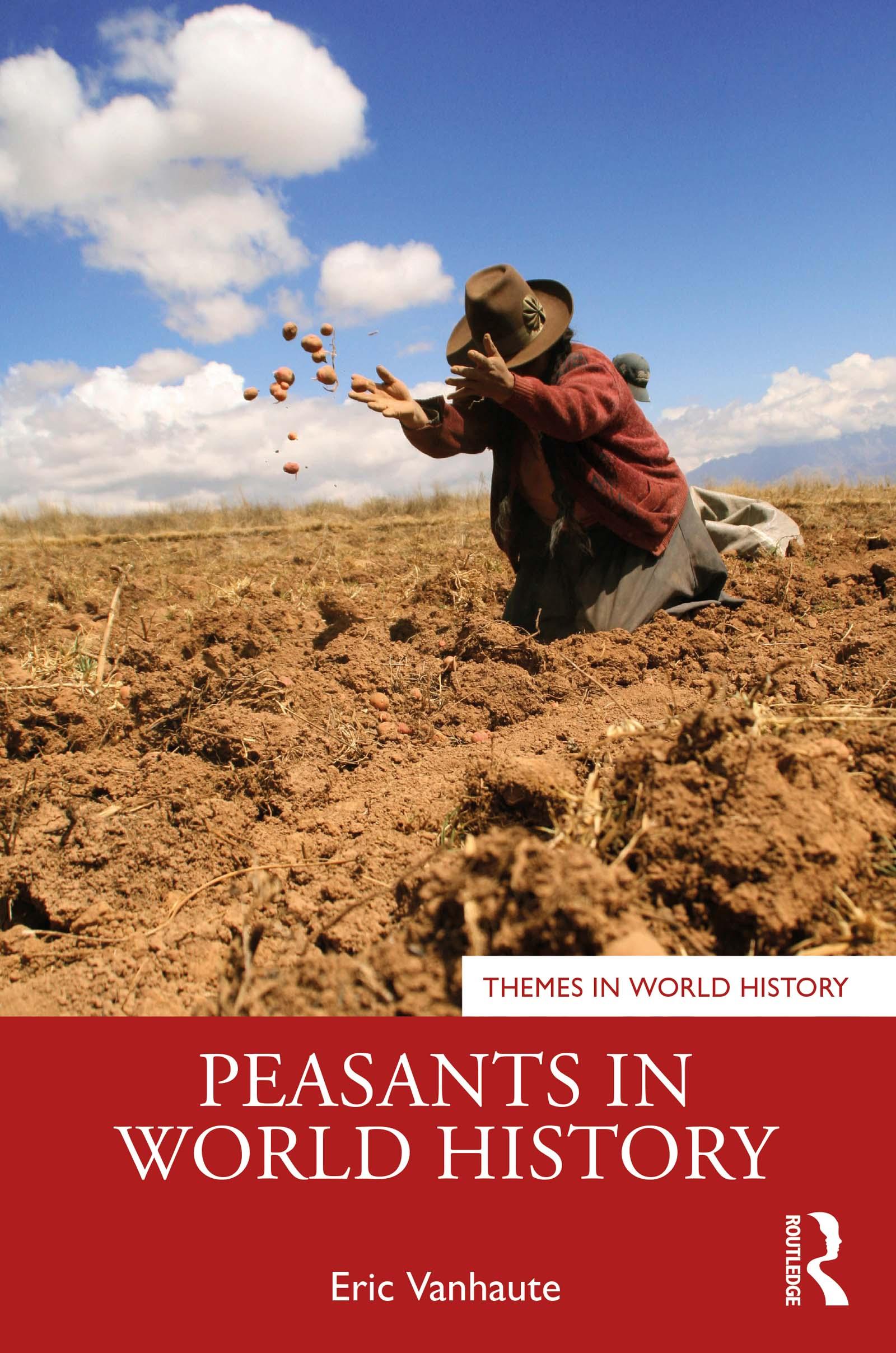
This is the first world history of peasants. Peasants in World History analyzes the multiple transformations of peasant life through history by focusing on three primary areas: the organization of peasant societies, their integration within wider societal structures, and the changing connections between local, regional and global processes.
Peasants have been a vital component in human history over the last 10,000 years, with nearly one-third of the world’s population still living a peasant lifestyle today. Their role as rural producers of ever-new surpluses instigated complex and often-opposing processes of social and spatial change throughout the world. Eric Vanhaute frames this social change in a story of evolving peasant frontiers. These frontiers provide a global comparative-historical lens to look at the social, economic and ecological changes within village-systems, agrarian empires and global capitalism. Bringing the story of the peasantry up through the modern period and looking to the future, the author offers a succinct overview with students in mind.
This book is recommended reading to anyone interested in the history and future of peasantries and is a valuable addition to undergraduate and graduate courses in World History, Global Economic History, Global Studies and Rural Sociology.
Pay easily by card, Klarna, Apple Pay or Google Pay. Not happy? You always have a 14-day money-back guarantee. Read more in our terms. If you have any questions, email us at hello@memmo.org.
Memmo makes studying easier – wherever you are in the world. We bring your course books and smart study tools together in one place: summaries, quizzes, podcasts and flashcards. Plus Ted, your study buddy who answers anything you wonder. Over 50,000 students already study here – built to help you learn faster and stress less.