
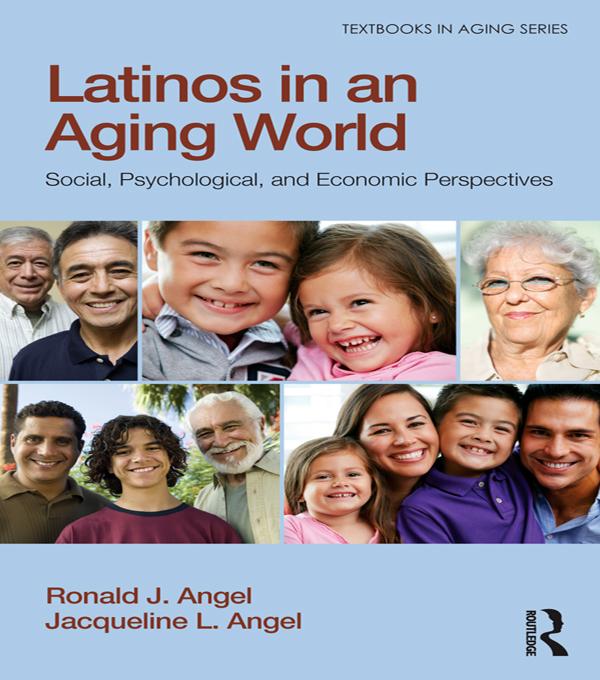
This book fosters a deeper understanding of the growing Latino elderly population and the implications on society. It examines post-WWII demographic and social changes and summarizes research from sociology, psychology, economics, and public health to shed light on the economic, physical, and mental well-being of older Latinos. The political and cultural implications including possible policy changes are also considered. Written in an engaging style, each chapter opens with a vignette that puts a human face on the issues. Boxed exhibits highlight social programs and policies and physical and mental health challenges that impact Latino elders. Web alerts direct readers to sites that feature more detailed information related to the chapter’s issues. Each chapter also features an introduction, examples, tables, figures, a summary, and discussion questions. The self-contained chapters can be presented in any order.
Latinos in an Aging World explores:
Real world problems individuals face in dealing with poverty, immigration, and health and retirement decisions
The latest data on Latinos as compared to research on African- and Asian- Americans where appropriate
The unique historical, demographic, social, familial, and economic situations of various Latino subgroups including those from Mexico, Puerto Rico, and Cuba
How ethnicity affects one’s position of wealth and power and sense of citizenship.
The consequence of life-long disadvantages and stigmatization on economic, physical, and mental well-being
The impact of one’s neighborhood and the proximity to those from similar cultures on quality of life.
The introduction motivates the book and sets the stage for the entire discussion. Chapter 1 reviews the histories of the major Hispanic subgroups along with various theories as they relate to race, ethnicity, and gender that provide a conceptual framework for understanding the later chapters. Demographic, economic, and social profiles of the various Hispanic subgroups are explored in chapter 2. Next the Latino population is explored from various perspectives including the economic and social situations of men and women and their educational, marital and family, and labor force experiences. Chapter 4 examines older immigrants and their families and identifies the resources available to them in their communities that often replicate the cultural and social support system of the old country. Major health risks that older Latinos face as a result of the disadvantages they experience throughout life are examined in chapter 5. Family situations and long-term care and living arrangements of older Hispanics are examined in chapter 6. The impact of neighborhood on quality of life in terms of safety and physical and mental wellbeing is explored in chapter 7. The burden that eldercare can place upon those who bear the responsibility of their daily care is explored in chapter 8. Chapter 9 investigates the gaps in income between minority and non-Hispanic white Americans and reviews what individuals with few resources need to know about financial management. The book concludes with the social, political, and economic implications of the growing Hispanic population and the role of NGOs and other organizations in providing services to older populations.
Intended for courses on Latinos and aging, diversity, race and ethnicity, minorities and aging, adult development and aging, the psychology or sociology or politics of aging, geriatric social work, public health and aging, global aging, social or family policy, and health and society taught in the behavioral and social sciences, ethnic, or Latin American/Chicano Studies, this book also appeals to researchers and practitioners who work with Hispanic families.
Pay easily by card, Klarna, Apple Pay or Google Pay. Not happy? You always have a 14-day money-back guarantee. Read more in our terms. If you have any questions, email us at hello@memmo.org.
Memmo makes studying easier – wherever you are in the world. We bring your course books and smart study tools together in one place: summaries, quizzes, podcasts and flashcards. Plus Ted, your study buddy who answers anything you wonder. Over 50,000 students already study here – built to help you learn faster and stress less.