
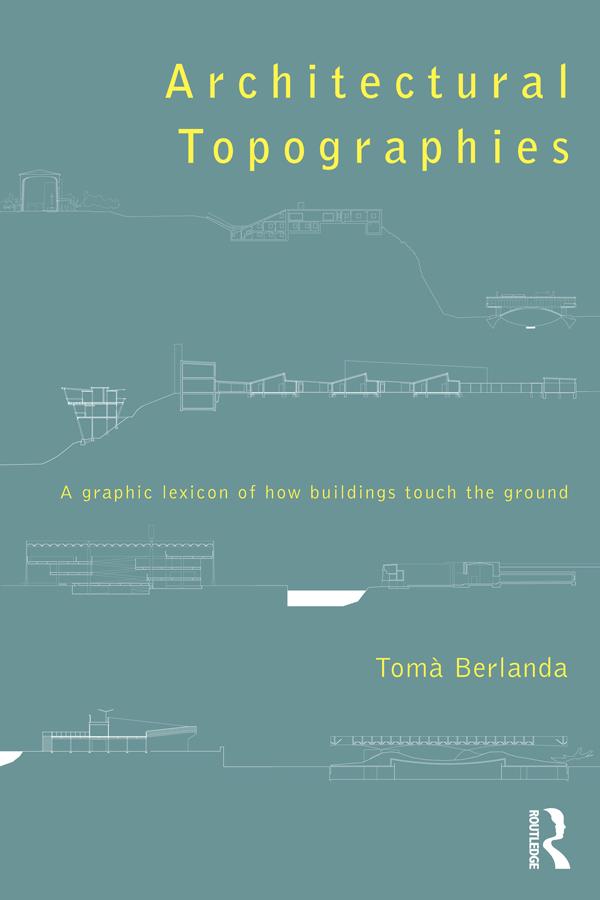
Architectural Topographies is a critical dictionary for architects and landscape architects in which the graphic lexicon can be read from a beginning, the ground, to a conclusion, the specific case studies. Meant as a tool to help you recognise, analyse, choose, and invent solutions, the book's key words refer to the physical and material relationship between construction and ground; to where and how the link is built; to the criteria, methods, and tools used to know and transform the ground; and to the possible approaches to the place and their implications on the way the earth is touched.
Fifty case studies by forty-six of the greatest architects of the previous hundred years are represented throughout in sectional drawings which place the buildings along the same ground plane to illustrate how the key words might be combined and to show each architect's position on their built work in relation to all the others.
Includes projects by Alvar Aalto; Tadao Ando; Gunnar Asplund; Atelier Bow-Wow; João Batista Vilanova Artigas; Patrick Berger; Mario Botta; Marcel Breuer; Erik Bryggman; Gonçalo Byrne; David Chipperfield; Le Corbusier; Sverre Fehn; Aurelio Galfetti, Flora Ruchat, and Ivo Trumpy; Dick Van Gameren; Herzog and De Meuron; Steven Holl; Arne Jacobsen; Kengo Kuma; Anne Lacaton and Jean Philippe Vassal; Adalberto Libera; Frank Lloyd Wright; Paulo Mendes da Rocha; Ludwig Mies van der Rohe; Enric Miralles and Carme Pinos; Glenn Murcutt; Juan Navarro Baldeweg; Sheila O’Donnell and John Tuomey; Jan Olav Jensen and Børre Skodvin; John Pawson; Giuseppe Perugini, Mario Fiorentino, and Nello Aprile; Renzo Piano; Georges-Henry Pingusson; Rudolph Schindler; Roland Simounet; Alvaro Siza; Luigi Snozzi; Alejandro de la Sota; Eduardo Souto de Moura; Alison Smithson and Peter Smithson; Fernando Tavora; Jørn Utzon; Livio Vacchini; Francesco Venezia, Roberto Collovà, and Marcella Aprile; Amancho Williams; and Peter Zumthor.
Pay easily by card, Klarna, Apple Pay or Google Pay. Not happy? You always have a 14-day money-back guarantee. Read more in our terms. If you have any questions, email us at hello@memmo.org.
Memmo makes studying easier – wherever you are in the world. We bring your course books and smart study tools together in one place: summaries, quizzes, podcasts and flashcards. Plus Ted, your study buddy who answers anything you wonder. Over 50,000 students already study here – built to help you learn faster and stress less.