
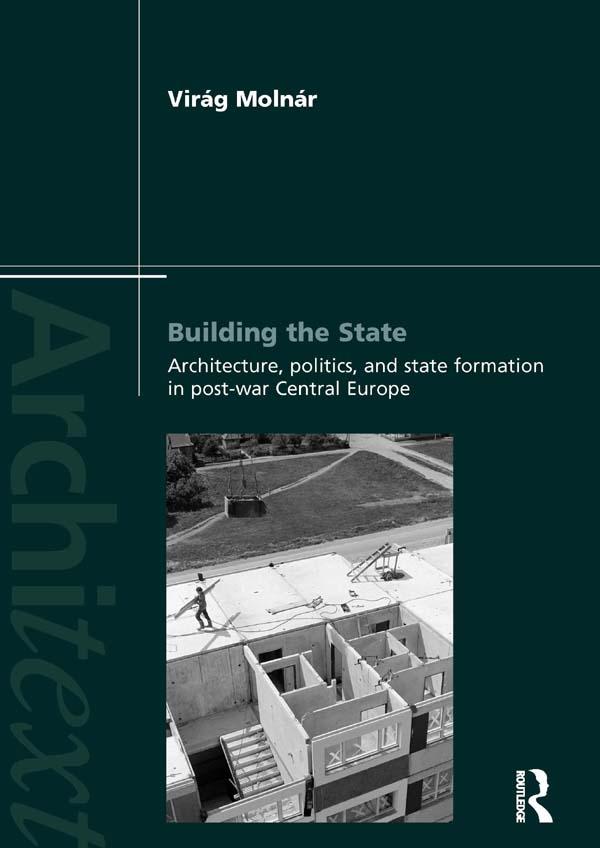
The built environment of former socialist countries is often deemed uniform and drab, an apt reflection of a repressive regime. Building the State peeks behind the grey façade to reveal a colourful struggle over competing meanings of the nation, Europe, modernity and the past in a divided continent.
Examining how social change is closely intertwined with transformations of the built environment, this volume focuses on the relationship between architecture and state politics in postwar Central Europe using examples from Hungary and Germany. Built around four case studies, the book traces how architecture was politically mobilized in the service of social change, first in socialist modernization programs and then in the postsocialist transition.
Building the State does not only offer a comprehensive survey of the diverse political uses of architecture in postwar Central Europe but is the first book to explore how transformations of the built environment can offer a lens into broader processes of state formation and social change.
Pay easily by card, Klarna, Apple Pay or Google Pay. Not happy? You always have a 14-day money-back guarantee. Read more in our terms. If you have any questions, email us at hello@memmo.org.
Memmo makes studying easier – wherever you are in the world. We bring your course books and smart study tools together in one place: summaries, quizzes, podcasts and flashcards. Plus Ted, your study buddy who answers anything you wonder. Over 75,000 students already study here – built to help you learn faster and stress less.