
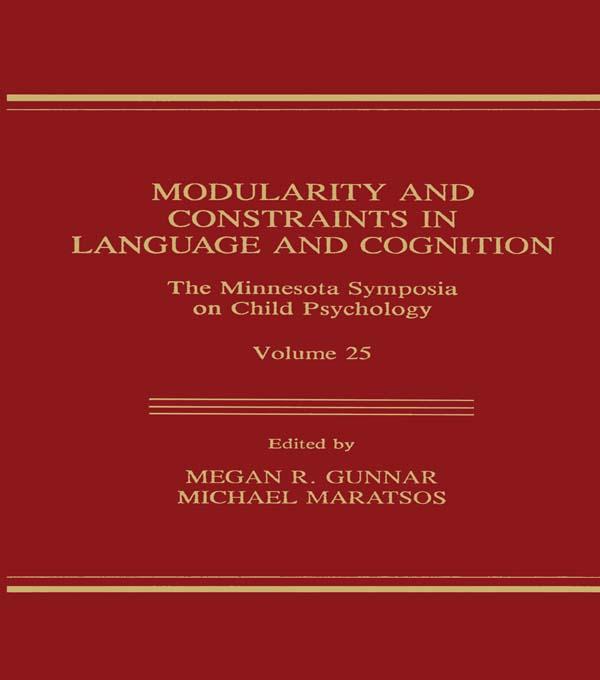
One of the central problems in the study of modern cognition is the degree to which higher cognition is modularized: that is, how much are higher functions carried out by domain-specific, specialized, cognitive subsystems, rather than a highly general cognitive learning and inferring device? To date, ideas and proposals about modularity have been best developed in the study of vision and grammar. In the present volume, the usefulness of approaches employing modularity and domain specificity are further explored in papers on the development of biological thought, word meaning, symbols, and emotional development, as well as in the core area of grammar itself, by leading researchers in these fields. The volume also contains an introduction to some basic ideas and concepts in the study of modularity and domain-specificity, and some critical discussion of the overall problems of the modularity constraints approach to analyzing development.
Pay easily by card, Klarna, Apple Pay or Google Pay. Not happy? You always have a 14-day money-back guarantee. Read more in our terms. If you have any questions, email us at hello@memmo.org.
Memmo makes studying easier – wherever you are in the world. We bring your course books and smart study tools together in one place: summaries, quizzes, podcasts and flashcards. Plus Ted, your study buddy who answers anything you wonder. Over 50,000 students already study here – built to help you learn faster and stress less.