
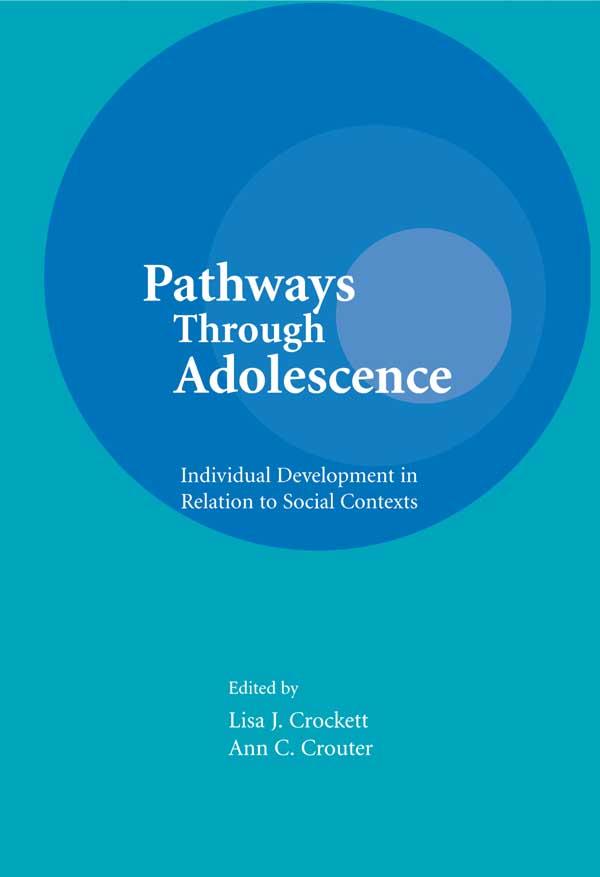
Adolescent researchers are increasingly aware that they must examine development both across time and across context. To do so, however, requires new conceptualizations and methodological approaches to the study of development, including attention to the pathways young people choose in adolescence and follow into adulthood. This volume assembles work by key researchers in the field who are struggling to understand how developmental trajectories are constructed and maintained throughout the adolescent period.
A complete understanding of developmental pathways requires the recognition that adolescents' social contexts--family, school, neighborhood, and/or peer group--are important influences on the choices they make at this developmental period. Researchers have traditionally studied contexts in isolation rather than examining the interrelationships among contexts and their implications for adolescent development. The present volume seeks to address this gap in the literature, with attention given not only to the interrelationships among contexts for white, middle-class youth, but also to these issues for minority adolescents in neighborhoods that vary in terms of access to resources. It concludes with an examination of researcher-community collaboration as a strategy to move communities toward a greater awareness of adolescent development and the problems facing youth in their community, and as a means to promote potential avenues for policy change and intervention.
Pay easily by card, Klarna, Apple Pay or Google Pay. Not happy? You always have a 14-day money-back guarantee. Read more in our terms. If you have any questions, email us at hello@memmo.org.
Memmo makes studying easier – wherever you are in the world. We bring your course books and smart study tools together in one place: summaries, quizzes, podcasts and flashcards. Plus Ted, your study buddy who answers anything you wonder. Over 50,000 students already study here – built to help you learn faster and stress less.