
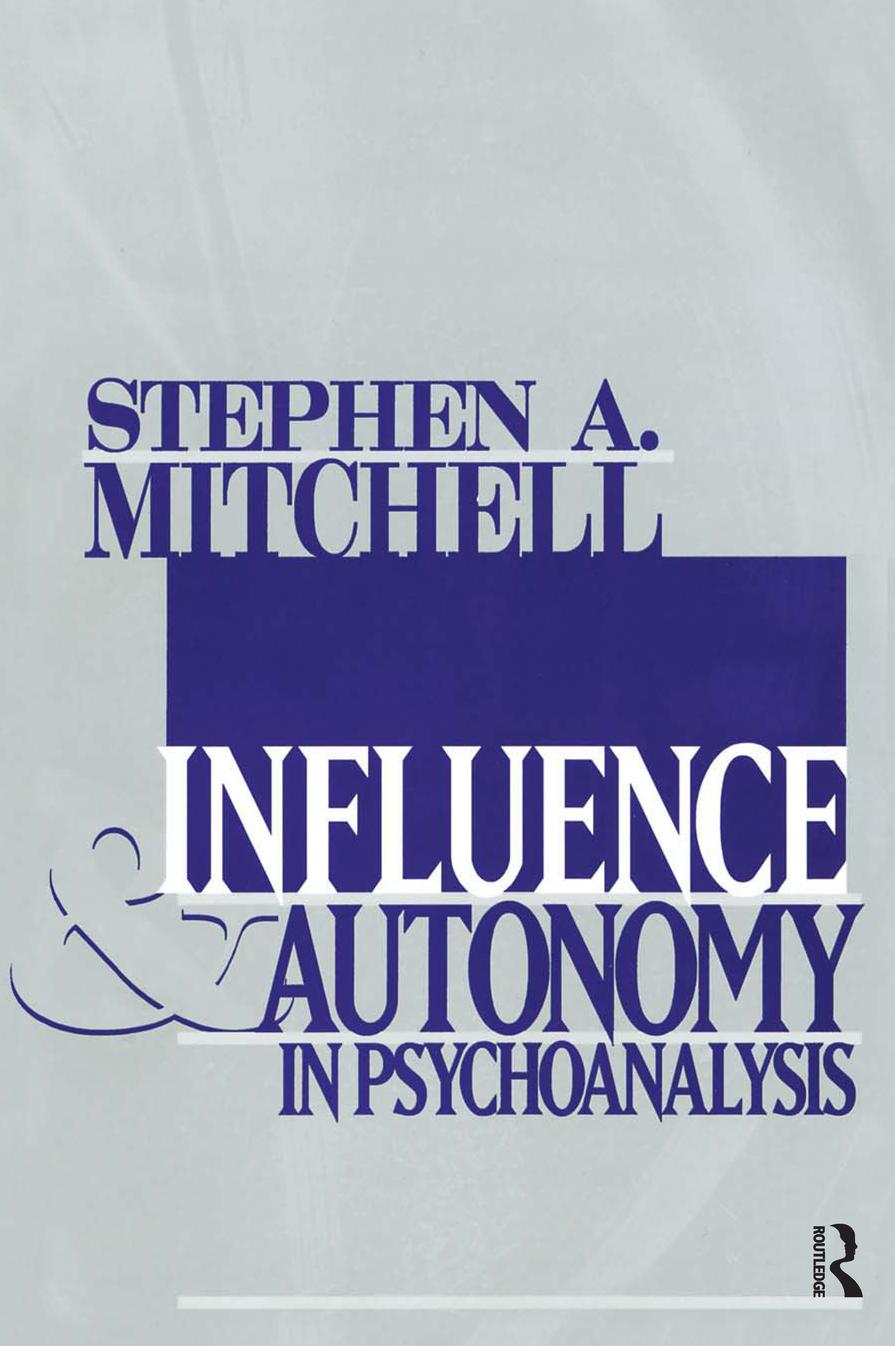
Stephen A. Mitchell has been at the forefront of the broad paradigmatic shift in contemporary psychoanalysis from the traditional one-person model to a two-person, interactive, relational perspective. In Influence and Autonomy in Psychoanalysis, Mitchell provides a critical, comparative framework for exploring the broad array of concepts newly developed for understanding interactive processes between analysand and analyst. Drawing on the broad traditions of Kleinian theory and interpersonal psychoanalysis, as well as object relations and progressive Freudian thought, he considers in depth the therapeutic action of psychoanalysis, anachronistic ideals like anonymity and neutrality, the nature of analytic knowledge and authority, and the problems of gender and sexual orientation in the age of postmodernism. The problem of influence guides his discussion of these and other topics. How, Mitchell asks, can analytic clinicians best protect the patient’s autonomy and integrity in the context of our growing appreciation of the enormous personal impact of the analyst on the process?
Although Mitchell explores many facets of the complexity of the psychoanalytic process, he presents his ideas in his customarily lucid, jargon-free style, making this book appealing not only to clinicians with various backgrounds and degrees of experience, but also to lay readers interested in the achievements of, and challenges before, contemporary psychoanalysis. A splendid effort to relate parallel lines of theorizing and derivative changes in clinical practice and informed by mature clinical judgment and broad scholarship into the history of psychoanalytic ideas, Influence and Autonomy in Psychoanalysis takes a well-deserved place alongside Mitchell’s previous books. It is a brilliant synthesis of converging insights that have transformed psychoanalysis in our time, and a touchstone for enlightened dialogue as psychoanalysis approaches the millennium.
Pay easily by card, Klarna, Apple Pay or Google Pay. Not happy? You always have a 14-day money-back guarantee. Read more in our terms. If you have any questions, email us at hello@memmo.org.
Memmo makes studying easier – wherever you are in the world. We bring your course books and smart study tools together in one place: summaries, quizzes, podcasts and flashcards. Plus Ted, your study buddy who answers anything you wonder. Over 50,000 students already study here – built to help you learn faster and stress less.