
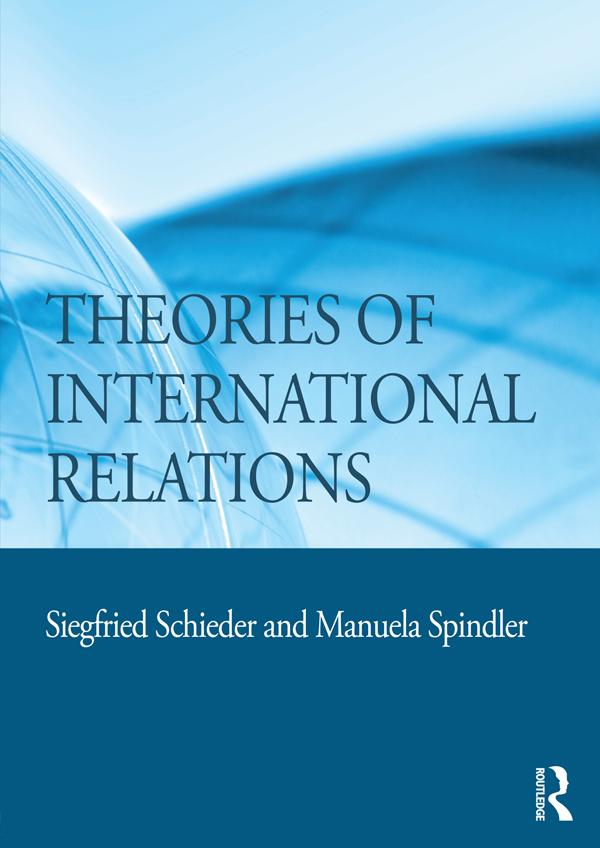
This book is a comprehensive guide to theories of International Relations (IR). Given the limitations of a paradigm-based approach, it sheds light on eighteen theories and new theoretical perspectives in IR by examining the work of key reference theorists. The chapters are all written to a common template. The introductory section provides readers with a basic understanding of the theory’s genesis by locating it within an intellectual tradition, paying particular attention to the historical and political context. The second section elaborates on the theory as formulated by the selected reference theorist. After this account of the theory’s core elements, the third section turns to theoretical variations, examining conceptual subdivisions and overlaps, further developments and internal critique. The fourth section scrutinizes the main criticisms emanating from other theoretical perspectives and highlights points of contact with recent research in IR. The fifth and final section consists of a bibliography carefully compiled to aid students’ further learning.
Encompassing a broad range of mainstream, traditional theories as well as emerging and critical perspectives, this is an original and ground-breaking textbook for students of International Relations.
The German edition of the book won the "Geisteswissenschaften International" Prize, collectively awarded by the Fritz Thyssen Foundation, the German Federal Foreign Office and the German Publishers & Booksellers Association.
Pay easily by card, Klarna, Apple Pay or Google Pay. Not happy? You always have a 14-day money-back guarantee. Read more in our terms. If you have any questions, email us at hello@memmo.org.
Memmo makes studying easier – wherever you are in the world. We bring your course books and smart study tools together in one place: summaries, quizzes, podcasts and flashcards. Plus Ted, your study buddy who answers anything you wonder. Over 50,000 students already study here – built to help you learn faster and stress less.