
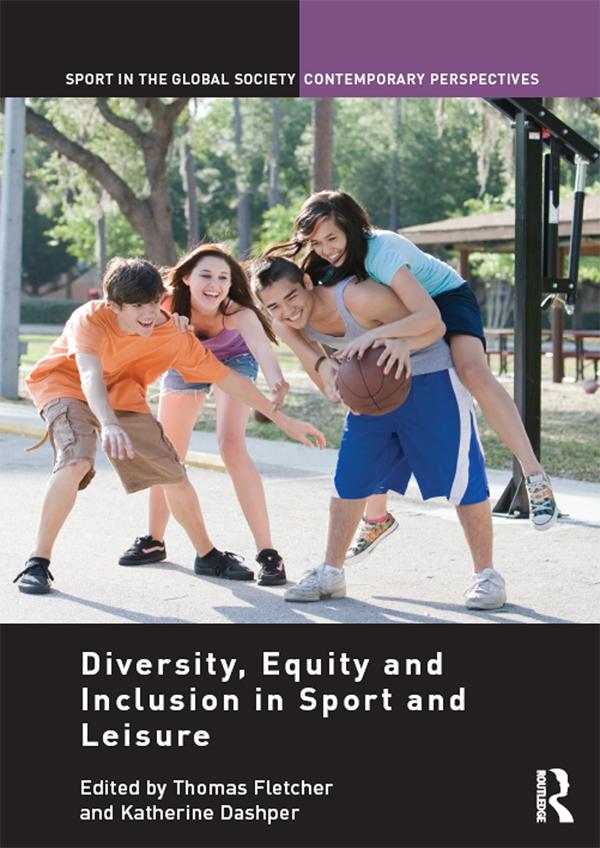
Despite the mythology of sport bringing people together and encouraging everyone to work collectively to success, modern sport remains a site of exclusionary practices that operate on a number of levels. Although sports participation is, in some cases at least, becoming more open and meritocratic, at the management level it remains very homogenous; dominated by western, white, middle-aged, able-bodied men. This has implications both for how sport develops and how it is experienced by different participant groups, across all levels. Critical studies of sport have revealed that, rather than being a passive mechanism and merely reflecting inequality, sport, via social agents’ interactions with sporting spaces, is actively involved in producing, reproducing, sustaining and indeed, resisting, various manifestations of inequality. The experiences of marginalised groups can act as a resource for explaining contemporary political struggles over what sport means, how it should be played (and by whom), and its place within wider society. Central to this collection is the argument that the dynamics of cultural identities are contextually contingent; influenced heavily by time and place and the extent to which they are embedded in the culture of their geographic location. They also come to function differently within certain sites and institutions; be it in one’s everyday routine or leisure pursuits, such as sport. Among the themes and issues explored by the contributors to this volume are: social inclusion and exclusion in relation to class, ‘race’ and ethnicity, gender and sexuality; social identities and authenticity; social policy, deviance and fandom.
This book was published as a special issue of Sport in Society.
Pay easily by card, Klarna, Apple Pay or Google Pay. Not happy? You always have a 14-day money-back guarantee. Read more in our terms. If you have any questions, email us at hello@memmo.org.
Memmo makes studying easier – wherever you are in the world. We bring your course books and smart study tools together in one place: summaries, quizzes, podcasts and flashcards. Plus Ted, your study buddy who answers anything you wonder. Over 75,000 students already study here – built to help you learn faster and stress less.