
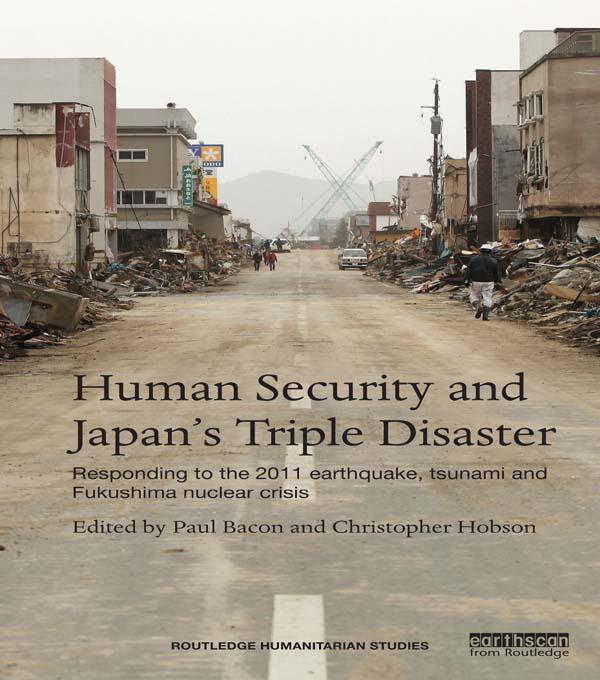
Japan has been one of the most important international sponsors of human security, yet the concept has hitherto not been considered relevant to the Japanese domestic context. This book applies the human security approach to the specific case of the earthquake, tsunami and nuclear accident that struck Japan on 11 March 2011, which has come to be known as Japan's ‘triple disaster’. This left more than 15,000 people dead and was the most expensive natural disaster in recorded history.
The book identifies the many different forms of human insecurity that were produced or exacerbated within Japan by the triple disaster. Each chapter adds to the contemporary literature by identifying the vulnerability of Japanese social groups and communities, and examining how they collectively seek to prevent, respond to and recover from disaster. Emphasis is given to analysis of the more encouraging signs of human empowerment that have occurred. Contributors draw on a wide range of perspectives, from disciplines such as: disaster studies, environmental studies, gender studies, international relations, Japanese studies, philosophy and sociology.
In considering this Japanese case study in detail, the book demonstrates to researchers, postgraduate students, policy makers and practitioners how the concept of human security can be practically applied at a policy level to the domestic affairs of developed countries, countering the tendency to regard human security as exclusively for developing states.
Pay easily by card, Klarna, Apple Pay or Google Pay. Not happy? You always have a 14-day money-back guarantee. Read more in our terms. If you have any questions, email us at hello@memmo.org.
Memmo makes studying easier – wherever you are in the world. We bring your course books and smart study tools together in one place: summaries, quizzes, podcasts and flashcards. Plus Ted, your study buddy who answers anything you wonder. Over 50,000 students already study here – built to help you learn faster and stress less.