
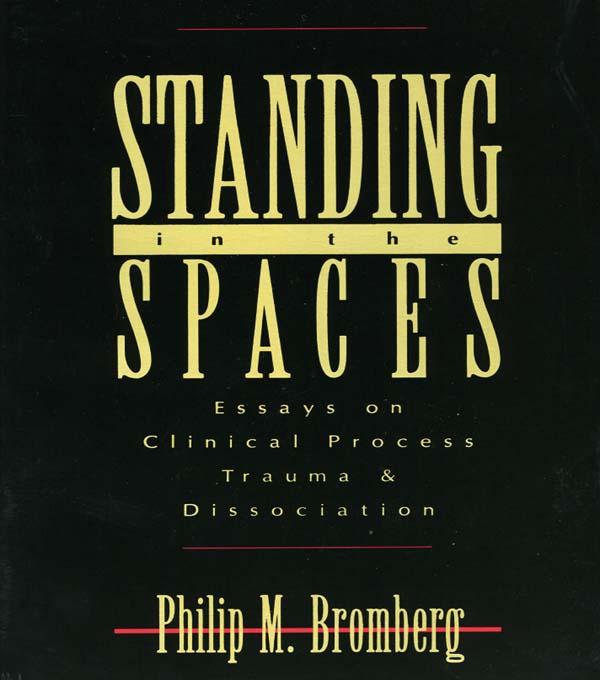
Early in these essays, Bromberg contemplates how one might engage schizoid detachment within an interpersonal perspective. To his surprise, he finds that the road to the patient's disavowed experiences most frequently passes through the analyst's internal conversation, as multiple configurations of self-other interaction, previously dissociated, are set loose first in the analyst and then played out in the interpersonal field.
This insight leads to other discoveries. Beneath the dissociative structures seen in schizoid patients, and also in other personality disorders, Bromberg regularly finds traumatic experience -- even in patients not otherwise viewed as traumatized. This discovery allows interpersonal notions of psychic structure to emerge in a new light, as Bromberg arrives at the view that all severe character pathology masks dissociative defenses erected to ward off the internal experience of trauma and to keep the external world at bay to avoid retraumatization. These insights, in turn, open to a new understanding of dissociative processes as intrinsic to the therapeutic process per se. For Bromberg, it is the unanticipated eruption of the patient's relational world, with its push-pull impact on the analyst's effort to maintain a therapeutic stance, that makes possible the deepest and most therapeutically fruitful type of analytic experience.
Bromberg's essays are delightfully unpredictable, as they strive to keep the reader continually abreast of how words can and cannot capture the subtle shifts in relatedness that characterize the clinical process. Indeed, at times Bromberg's writing seems vividly to recreate the alternating states of mind of the relational analyst at work. Stirringly evocative in character and radiating clinical wisdom infused with compassion and wit, Standing in the Spaces is a classic destined to be read and reread by analysts and therapists for decades to come.
Pay easily by card, Klarna, Apple Pay or Google Pay. Not happy? You always have a 14-day money-back guarantee. Read more in our terms. If you have any questions, email us at hello@memmo.org.
Memmo makes studying easier – wherever you are in the world. We bring your course books and smart study tools together in one place: summaries, quizzes, podcasts and flashcards. Plus Ted, your study buddy who answers anything you wonder. Over 50,000 students already study here – built to help you learn faster and stress less.