
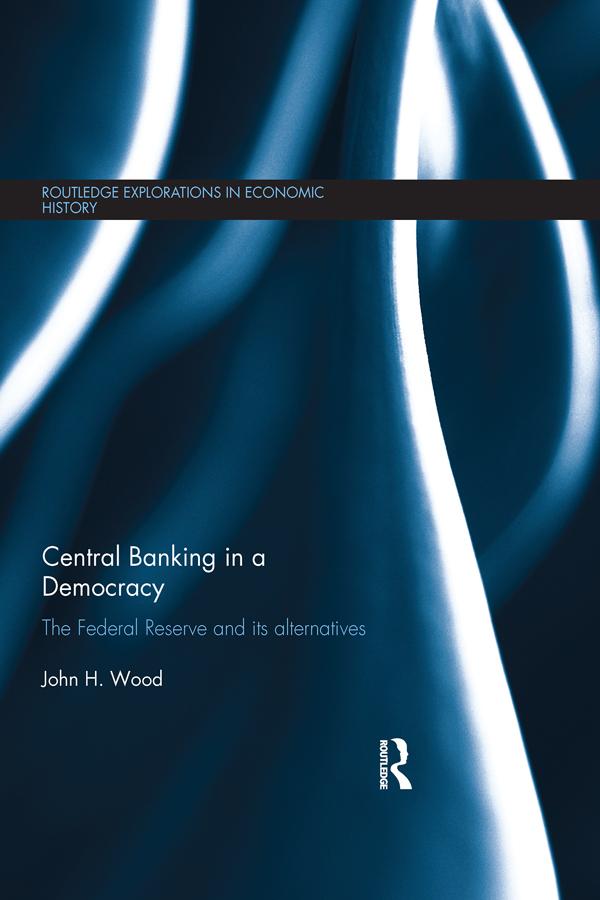
The Federal Reserve System, which has been Congress’s agent for the control of money since 1913, has a mixed reputation. Its errors have been huge. It was the principal cause of the Great Depression of the 1930s and the inflation of the 1970s, and participated in the massive bailouts of financial institutions at taxpayers' expense during the recent Great Recession.
This book is a study of the causes of the Fed’s errors, with lessons for an improved monetary authority, beginning with an examination of the history of central banks, in which it is found that their performance depended on their incentives, as is to be expected of economic agents. An implication of these findings is that the Fed’s failings must be traced to its institutional independence, particularly of the public welfare. Consequently, its policies have been dictated by special interests: financial institutions who desire public support without meaningful regulation, as well as presidents and those portions of Congress desiring growing government financed by inflation.
Monetary stability (which used to be thought the primary purpose of central banks) requires responsibility, meaning punishment for failure, instead of a remote and irresponsible (to the public) agency such as the Fed. It requires either private money motivated by profit or Congress disciplined by the electoral system as before 1913. Change involving the least disturbance to the system suggests the latter.
Pay easily by card, Klarna, Apple Pay or Google Pay. Not happy? You always have a 14-day money-back guarantee. Read more in our terms. If you have any questions, email us at hello@memmo.org.
Memmo makes studying easier – wherever you are in the world. We bring your course books and smart study tools together in one place: summaries, quizzes, podcasts and flashcards. Plus Ted, your study buddy who answers anything you wonder. Over 50,000 students already study here – built to help you learn faster and stress less.