
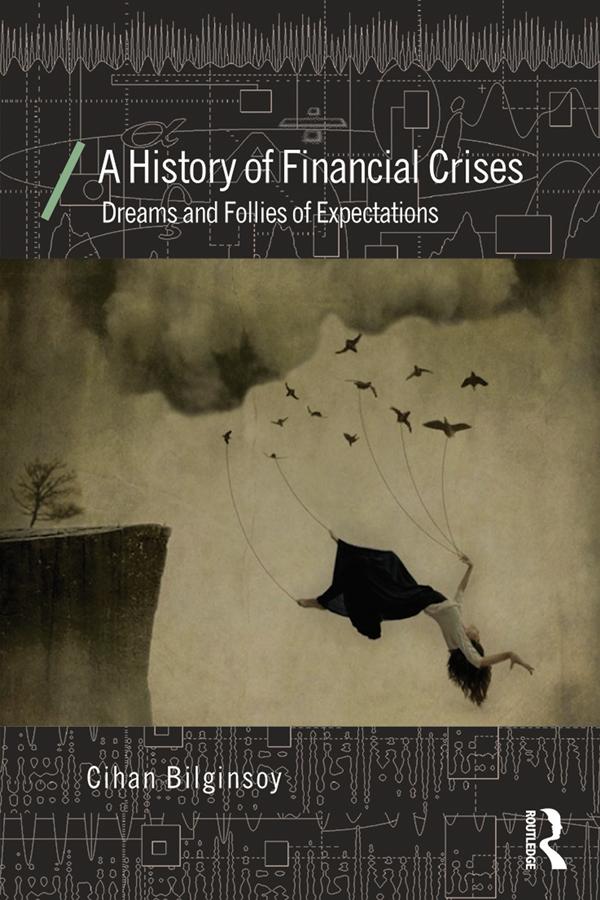
"Once-in-a-lifetime" financial crises have been a recurrent part of life in the last three decades. It is no longer possible to dismiss or ignore them as aberrations in an otherwise well-functioning system. Nor are they peculiar to recent times. Going back in history, asset price bubbles and bank-runs have been an endemic feature of the capitalist system over the last four centuries. The historical record offers a treasure trove of experience that may shed light on how and why financial crises happen and what can be done to avoid them - provided we are willing to learn from history.
This book interweaves historical accounts with competing economic crisis theories and reveals why commentaries are often contradictory. First, it presents a series of episodes from tulip mania in the 17th century to the subprime mortgage meltdown. In order to tease out their commonalities and differences, it describes political, economic, and social backgrounds, identifies the primary actors and institutions, and explores the mechanisms behind the asset price bubbles, crashes, and bank-runs. Second, it starts with basic economic concepts and builds five competing theoretical approaches to understanding financial crises. Competing theoretical standpoints offer different interpretations of the same event, and draw dissimilar policy implications.
This book analyses divergent interpretations of the historical record in relation to how markets function, the significance of market imperfections, economic decision-making process, the role of the government, and evolutionary dynamics of the capitalist system. Its diverse theoretical and historical content of this book complements economics, history and political science curriculum.
Pay easily by card, Klarna, Apple Pay or Google Pay. Not happy? You always have a 14-day money-back guarantee. Read more in our terms. If you have any questions, email us at hello@memmo.org.
Memmo makes studying easier – wherever you are in the world. We bring your course books and smart study tools together in one place: summaries, quizzes, podcasts and flashcards. Plus Ted, your study buddy who answers anything you wonder. Over 50,000 students already study here – built to help you learn faster and stress less.