
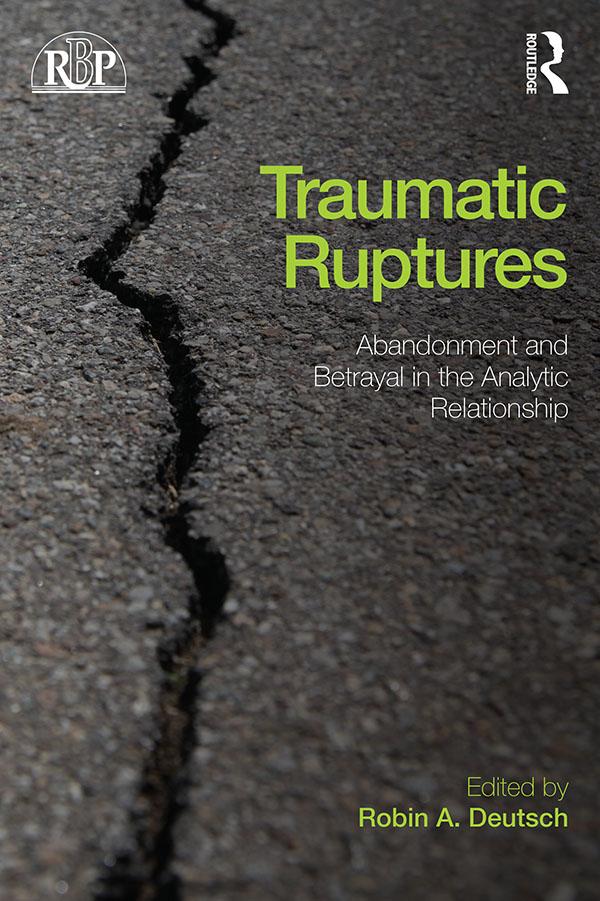
For much of its history, psychoanalysis has been strangely silent about sudden ruptures in the analytic relationship and their immediate and far-reaching effects for those involved. Such issues of betrayal and abandonment – the death of an analyst, a patient’s suicide, an ethical violation – disrupt the stability and cohesion of the analytic framework and leave indelible marks on both individuals and institutions alike.
In Traumatic Ruptures an international range of contributors present first-person, highly personal and sometimes painful accounts of their experiences and the occasionally difficult yet redeeming lessons they have taken from them. Presented in four parts, the book explores multiple meanings and consequences of the break in the analytic relationship. Part One, Ruptured Subjectivity: Lost and Found, presents accounts of clinical encounters with death. Part Two, Rupture: The Clinical Process, addresses the sudden loss of an analyst, the trauma of patient suicide and the issue of countertransference when working with patients who have suffered the unexpected loss of their first analyst. Part Three, The Long Shadow of Rupture, examines the effects of ethical violations in the short and long term. Finally, Part Four, Ruptures’ Impact on Organizations, looks at the wider impact of ethical and sexual boundary violations in the context of an organization and the effect of trauma on a psychoanalytic institute. By giving voice to issues that are usually silenced, the authors here open the door to understanding the complex nature of traumatic rupture within the analytic field.
This intimate exploration of psychoanalytic treatments and communities is ideal for psychoanalysts, psychologists, clinical social workers, psychiatrists and family therapists. It is an important text for clinicians working with individuals who have experienced traumatic ruptures and for members of organisations dealing with their effects.
Pay easily by card, Klarna, Apple Pay or Google Pay. Not happy? You always have a 14-day money-back guarantee. Read more in our terms. If you have any questions, email us at hello@memmo.org.
Memmo makes studying easier – wherever you are in the world. We bring your course books and smart study tools together in one place: summaries, quizzes, podcasts and flashcards. Plus Ted, your study buddy who answers anything you wonder. Over 50,000 students already study here – built to help you learn faster and stress less.