
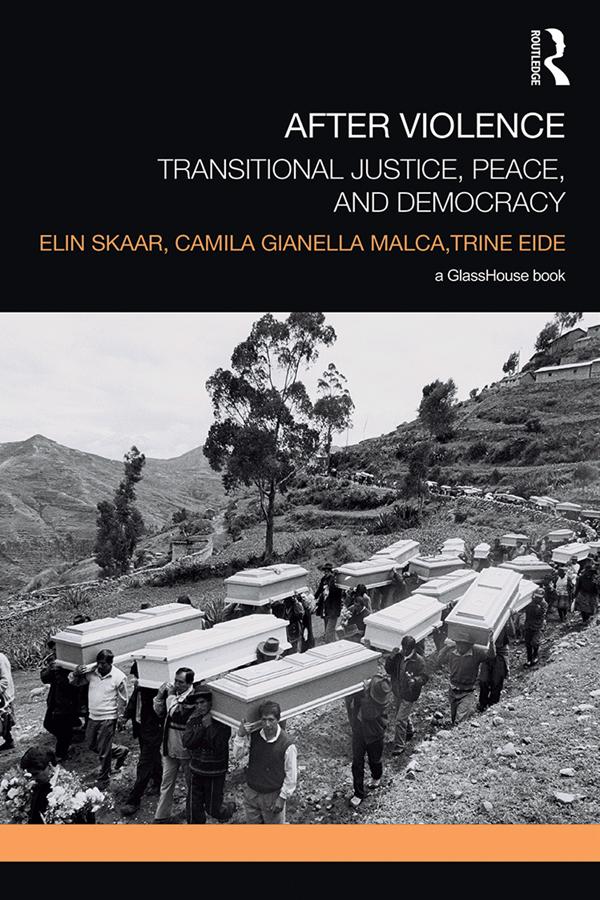
After Violence: Transitional Justice, Peace, and Democracy examines the effects of transitional justice on the development of peace and democracy. Anticipated contributions of transitional justice mechanisms are commonly stated in universal terms, with little regard for historically specific contexts. Yet a truth commission, for example, will not have the same function in a society torn by long-term civil war or genocide as in a society emerging from authoritarian repression. Addressing trials, reparations, truth commissions, and amnesties, the book systematically addresses the experiences of four very different contemporary transitional justice cases: post-authoritarian Uruguay and Peru and post-conflict Rwanda and Angola. Its analysis demonstrates that context is a crucial determinant of the impact of transitional justice processes, and identifies specific contextual obstacles and limitations to these processes. The book will be of much interest to scholars in the fields of transitional justice and peacebuilding, as well as students generally concerned with human rights and democratisation.
Pay easily by card, Klarna, Apple Pay or Google Pay. Not happy? You always have a 14-day money-back guarantee. Read more in our terms. If you have any questions, email us at hello@memmo.org.
Memmo makes studying easier – wherever you are in the world. We bring your course books and smart study tools together in one place: summaries, quizzes, podcasts and flashcards. Plus Ted, your study buddy who answers anything you wonder. Over 50,000 students already study here – built to help you learn faster and stress less.