
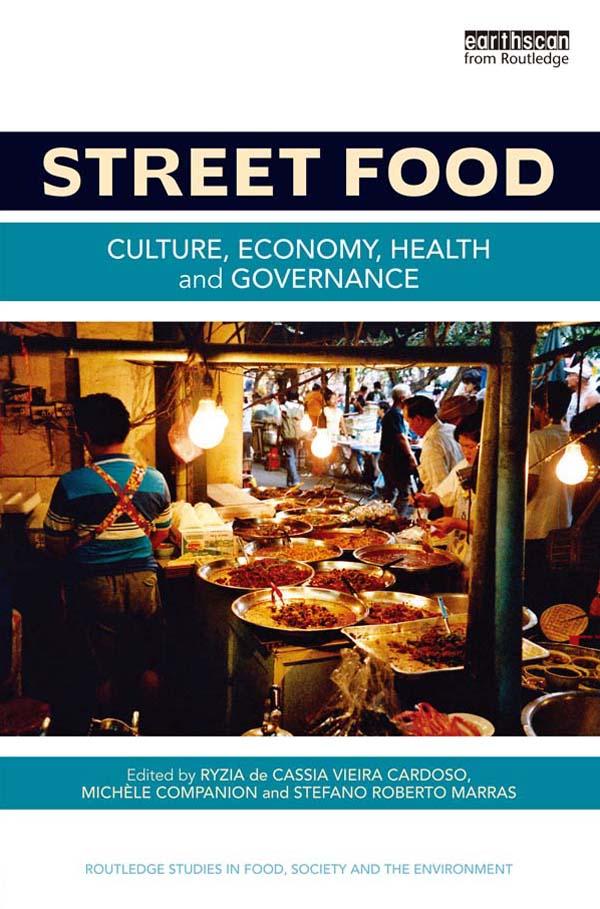
Prepared foods, for sale in streets, squares or markets, are ubiquitous around the world and throughout history. This volume is one of the first to provide a comprehensive social science perspective on street food, illustrating its immense cultural diversity and economic significance, both in developing and developed countries.
Key issues addressed include: policy, regulation and governance of street food and vendors; production and trade patterns ranging from informal subsistence to modern forms of enterprise; the key role played by female vendors; historical roots and cultural meanings of selling and eating food in the street; food safety and nutrition issues. Many chapters provide case studies from specific cities in different regions of the world. These include North America (Atlanta, Philadelphia, Portland, Toronto, Vancouver), Central and South America (Bogota, Buenos Aires, La Paz, Lima, Mexico City, Montevideo, Santiago, Salvador da Bahia), Asia (Bangkok, Dhaka, Penang), Africa (Accra, Abidjan, Bamako, Freetown, Mozambique) and Europe (Amsterdam).
Pay easily by card, Klarna, Apple Pay or Google Pay. Not happy? You always have a 14-day money-back guarantee. Read more in our terms. If you have any questions, email us at hello@memmo.org.
Memmo makes studying easier – wherever you are in the world. We bring your course books and smart study tools together in one place: summaries, quizzes, podcasts and flashcards. Plus Ted, your study buddy who answers anything you wonder. Over 50,000 students already study here – built to help you learn faster and stress less.