
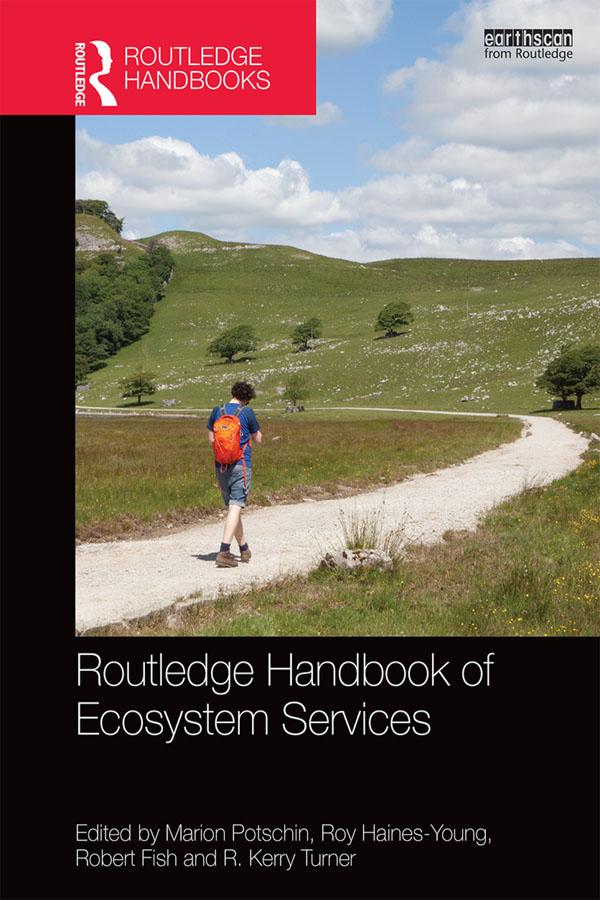
The idea that nature provides services to people is one of the most powerful concepts to have emerged over the last two decades. It is shaping our understanding of the role that biodiverse ecosystems play in the environment and their benefits for humankind. As a result, there is a growing interest in operational and methodological issues surrounding ecosystem services amongst environmental managers, and many institutions are now developing teaching programmes to equip the next generation with the skills needed to apply the concepts more effectively.
This handbook provides a comprehensive reference text on ecosystem services, integrating natural and social science (including economics). Collectively the chapters, written by the world's leading authorities, demonstrate the importance of biodiversity for people, policy and practice. They also show how the value of ecosystems to society can be expressed in monetary and non-monetary terms, so that the environment can be better taken into account in decision making. The significance of the ecosystem service paradigm is that it helps us redefine and better communicate the relationships between people and nature. It is shown how these are essential to resolving challenges such as sustainable development and poverty reduction, and the creation of a green economy in developing and developed world contexts.
Pay easily by card, Klarna, Apple Pay or Google Pay. Not happy? You always have a 14-day money-back guarantee. Read more in our terms. If you have any questions, email us at hello@memmo.org.
Memmo makes studying easier – wherever you are in the world. We bring your course books and smart study tools together in one place: summaries, quizzes, podcasts and flashcards. Plus Ted, your study buddy who answers anything you wonder. Over 50,000 students already study here – built to help you learn faster and stress less.