
Since the late nineteenth century, religious ideas and practices in Japan have become increasingly intertwined with those associated with mental health and healing. This relationship developed against the backdrop of a far broader, and deeply consequential meeting: between Japan’s long-standing, Chinese-influenced intellectual and institutional forms, and the politics, science, philosophy, and religion of the post-Enlightenment West. In striving to craft a modern society and culture that could exist on terms with – rather than be subsumed by – western power and influence, Japan became home to a religion--psy dialogue informed by pressing political priorities and rapidly shifting cultural concerns.
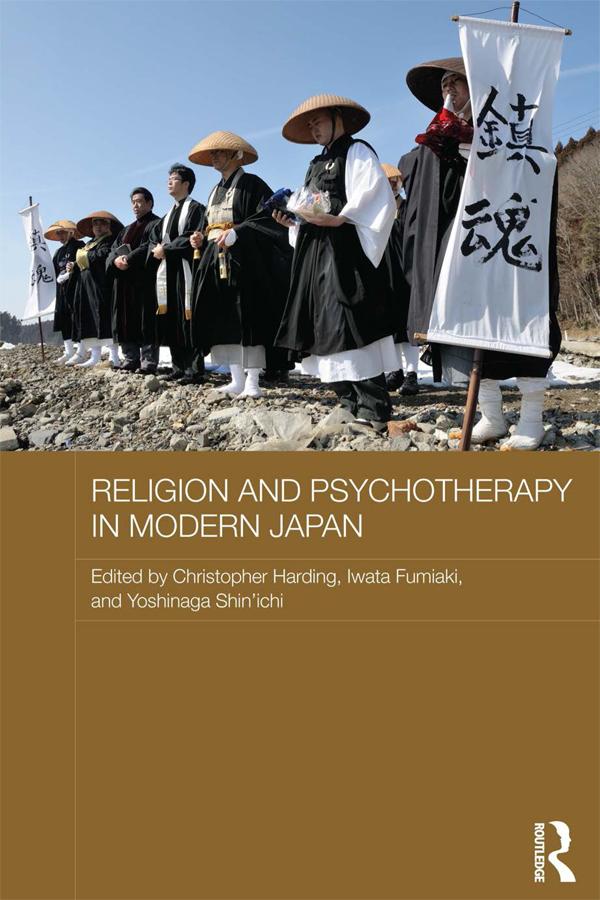
This book provides a historically contextualized introduction to the dialogue between religion and psychotherapy in modern Japan. In doing so, it draws out connections between developments in medicine, government policy, Japanese religion and spirituality, social and cultural criticism, regional dynamics, and gender relations. The chapters all focus on the meeting and intermingling of religious with psychotherapeutic ideas and draw on a wide range of case studies including: how temple and shrine ‘cures’ of early modern Japan fared in the light of German neuropsychiatry; how Japanese Buddhist theories of mind, body, and self-cultivation negotiated with the findings of western medicine; how Buddhists, Christians, and other organizations and groups drew and redrew the lines between religious praxis and psychological healing; how major European therapies such as Freud’s fed into self-consciously Japanese analyses of and treatments for the ills of the age; and how distress, suffering, and individuality came to be reinterpreted across the twentieth and early twenty-first centuries, from the southern islands of Okinawa to the devastated northern neighbourhoods of the Tohoku region after the earthquake, tsunami, and nuclear disasters of March 2011.
Religion and Psychotherapy in Modern Japan will be welcomed by students and scholars working across a broad range of subjects, including Japanese culture and society, religious studies, psychology and psychotherapy, mental health, and international history.
Pay easily by card, Klarna, Apple Pay or Google Pay. Not happy? You always have a 14-day money-back guarantee. Read more in our terms. If you have any questions, email us at hello@memmo.org.
Memmo makes studying easier – wherever you are in the world. We bring your course books and smart study tools together in one place: summaries, quizzes, podcasts and flashcards. Plus Ted, your study buddy who answers anything you wonder. Over 50,000 students already study here – built to help you learn faster and stress less.