
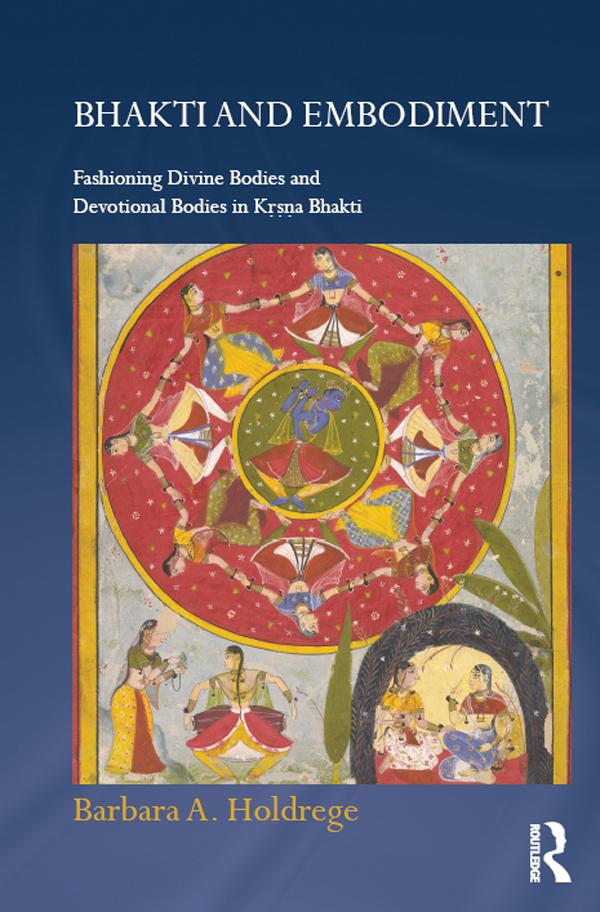
The historical shift from Vedic traditions to post-Vedic bhakti (devotional) traditions is accompanied by a shift from abstract, translocal notions of divinity to particularized, localized notions of divinity and a corresponding shift from aniconic to iconic traditions and from temporary sacrificial arenas to established temple sites. In Bhakti and Embodiment Barbara Holdrege argues that the various transformations that characterize this historical shift are a direct consequence of newly emerging discourses of the body in bhakti traditions in which constructions of divine embodiment proliferate, celebrating the notion that a deity, while remaining translocal, can appear in manifold corporeal forms in different times and different localities on different planes of existence. Holdrege suggests that an exploration of the connections between bhakti and embodiment is critical not only to illuminating the distinctive transformations that characterize the emergence of bhakti traditions but also to understanding the myriad forms that bhakti has historically assumed up to the present time.
This study is concerned more specifically with the multileveled models of embodiment and systems of bodily practices through which divine bodies and devotional bodies are fashioned in Krsna bhakti traditions and focuses in particular on two case studies: the Bhagavata Purana, the consummate textual monument to Vaisnava bhakti, which expresses a distinctive form of passionate and ecstatic bhakti that is distinguished by its embodied nature; and the Gaudiya Vaisnava tradition, an important bhakti tradition inspired by the Bengali leader Caitanya in the sixteenth century, which articulates a robust discourse of embodiment pertaining to the divine bodies of Krsna and the devotional bodies of Krsna bhaktas that is grounded in the canonical authority of the Bhagavata Purana.
Pay easily by card, Klarna, Apple Pay or Google Pay. Not happy? You always have a 14-day money-back guarantee. Read more in our terms. If you have any questions, email us at hello@memmo.org.
Memmo makes studying easier – wherever you are in the world. We bring your course books and smart study tools together in one place: summaries, quizzes, podcasts and flashcards. Plus Ted, your study buddy who answers anything you wonder. Over 50,000 students already study here – built to help you learn faster and stress less.