
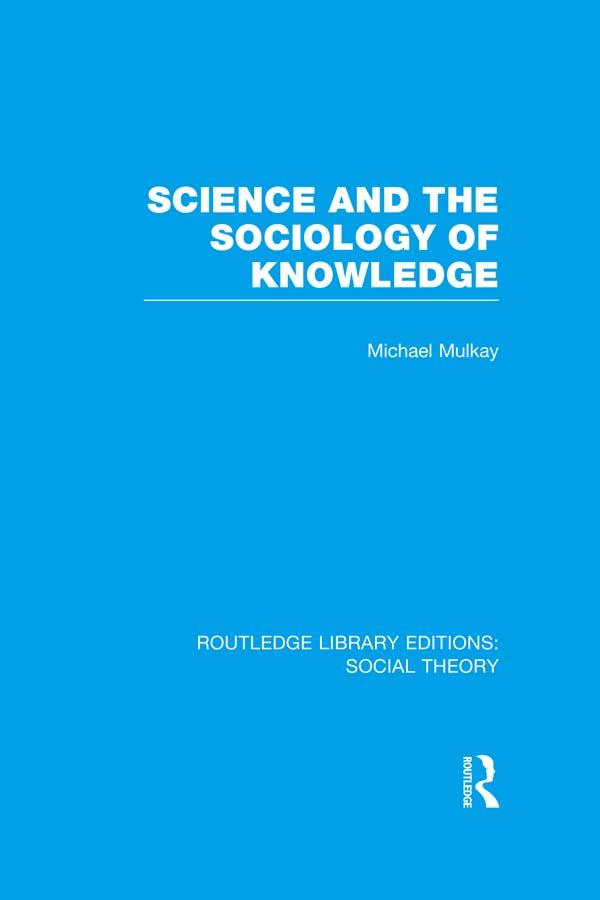
How far is scientific knowledge a product of social life? In addressing this question, the major contributors to the sociology of knowledge have agreed that the conclusions of science are dependent on social action only in a very special and limited sense. In Science and the Sociology of Knowledge Michael Mulkay's first aim is to identify the philosophical assumptions which have led to this view of science as special; and to present a systematic critique of the standard philosophical account of science, showing that there are no valid epistemological grounds for excluding scientific knowledge from the scope of sociological analysis.
The rest of the book is devoted to developing a preliminary interpretation of the social creation of scientific knowledge. The processes of knowledge-creation are delineated through a close examination of recent case studies of scientific developments. Dr Mulkay argues that knowledge is produced by means of negotiation, the outcome of which depends on the participants' use of social as well as technical resources. The analysis also shows how cultural resources are taken over from the broader social milieu and incorporated into the body of certified knowledge; and how, in the political context of society at large, scientists' technical as well as social claims are conditioned and affected by their social position.
Pay easily by card, Klarna, Apple Pay or Google Pay. Not happy? You always have a 14-day money-back guarantee. Read more in our terms. If you have any questions, email us at hello@memmo.org.
Memmo makes studying easier – wherever you are in the world. We bring your course books and smart study tools together in one place: summaries, quizzes, podcasts and flashcards. Plus Ted, your study buddy who answers anything you wonder. Over 50,000 students already study here – built to help you learn faster and stress less.