
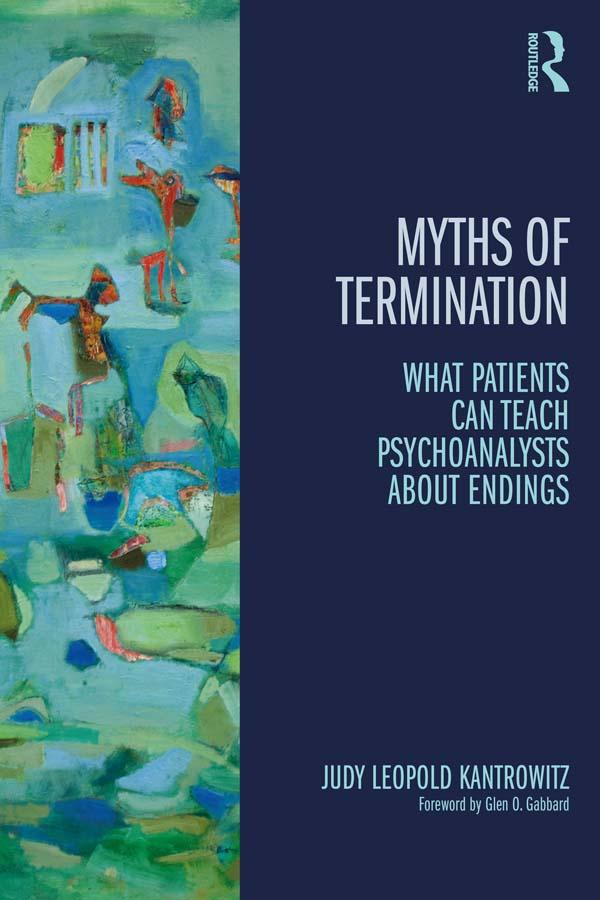
Psychoanalysis can make a huge difference in the lives of patients, their families and others they encounter. Myths have developed, however, about how psychoanalysis should end – what patients experience and what analysts do. These expectations come primarily from accounts by analysts in the analytic literature which are often perpetuated in an oversimplified form in teaching. Patients' perspectives are rarely presented. I her book, Judy Leopold Kantrowitz seeks to address this omission. Exploring the accounts of 82 former analysands, she illustrates the rich diversity of psychoanalytic endings and ways of maintaining analytic benefits after ending; in presenting patients' experiences Kantrowitz provides correctives for some myths about termination.
Myths of termination: What patients can teach psychoanalysts about endings is not a book that seeks to refute or support any specific idea about a best way of ending analysis, but rather to show that there are countless ways of having a satisfactory conclusion to the process. Nor is the author espousing any particular analytic theory. Kantrowitz sets out to show that an oversimplified view of psychoanalytic endings not only diminishes an appreciation of the diversity of psychoanalytic outcomes but may also interfere with the creativity of individual psychoanalysts. In this book, former analysands describe and illustrate how their analyses ended. They reflect on the effect of non-mutual endings due to external factors (moving, retirement, illness or death) or psychological factors (wishing to avoid facing some issue); the impact of post-analytic contact; and the ways in which they have held on to their analytic benefits after ending their analyses.
Myths of termination confronts and refutes the myths about the termination phase of psychoanalysis that are passed from generation to generation. It is a refreshing and insightful study that will be welcomed by psychoanalysts, psychodynamic therapists, such as clinical psychologists, social workers, and others trained or in training to do clinical work.
Pay easily by card, Klarna, Apple Pay or Google Pay. Not happy? You always have a 14-day money-back guarantee. Read more in our terms. If you have any questions, email us at hello@memmo.org.
Memmo makes studying easier – wherever you are in the world. We bring your course books and smart study tools together in one place: summaries, quizzes, podcasts and flashcards. Plus Ted, your study buddy who answers anything you wonder. Over 50,000 students already study here – built to help you learn faster and stress less.