
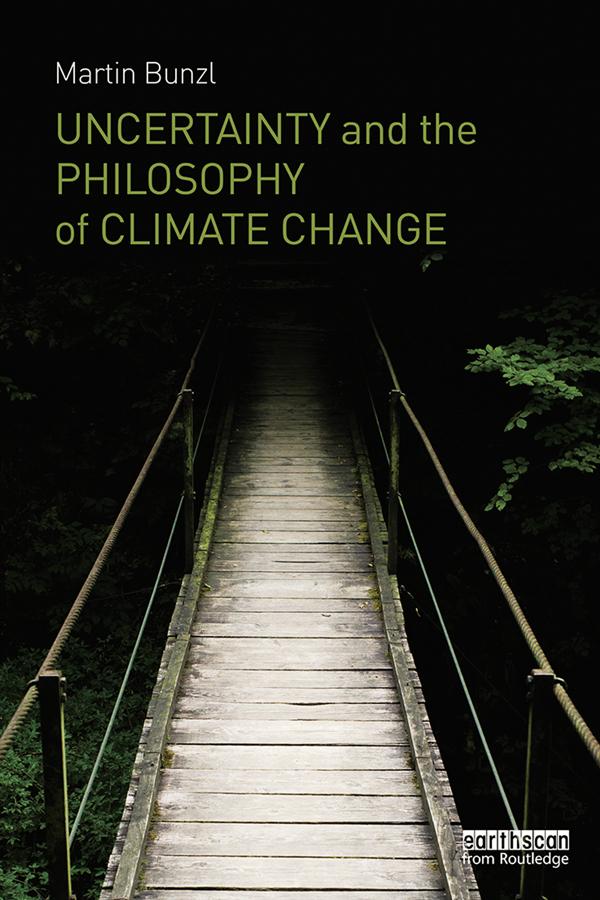
When it comes to climate change, the greatest difficulty we face is that we do not know the likely degree of change or its cost, which means that environmental policy decisions have to be made under uncertainty. This book offers an accessible philosophical treatment of the broad range of ethical and policy challenges posed by climate change uncertainty.
Drawing on both the philosophy of science and ethics, Martin Bunzl shows how tackling climate change revolves around weighing up our interests now against those of future generations, which requires that we examine our assumptions about the value of present costs versus future benefits. In an engaging, conversational style, Bunzl looks at questions such as our responsibility towards non-human life, the interests of the developing and developed worlds, and how the circumstances of poverty shape the perception of risk, ultimate developing and defending a view of humanity and its place in the world that makes sense of our duty to Nature without treating it as a rights bearer.
This book will be of interest to students and scholars of environmental studies, philosophy, politics and sociology as well as policy makers.
Pay easily by card, Klarna, Apple Pay or Google Pay. Not happy? You always have a 14-day money-back guarantee. Read more in our terms. If you have any questions, email us at hello@memmo.org.
Memmo makes studying easier – wherever you are in the world. We bring your course books and smart study tools together in one place: summaries, quizzes, podcasts and flashcards. Plus Ted, your study buddy who answers anything you wonder. Over 50,000 students already study here – built to help you learn faster and stress less.