
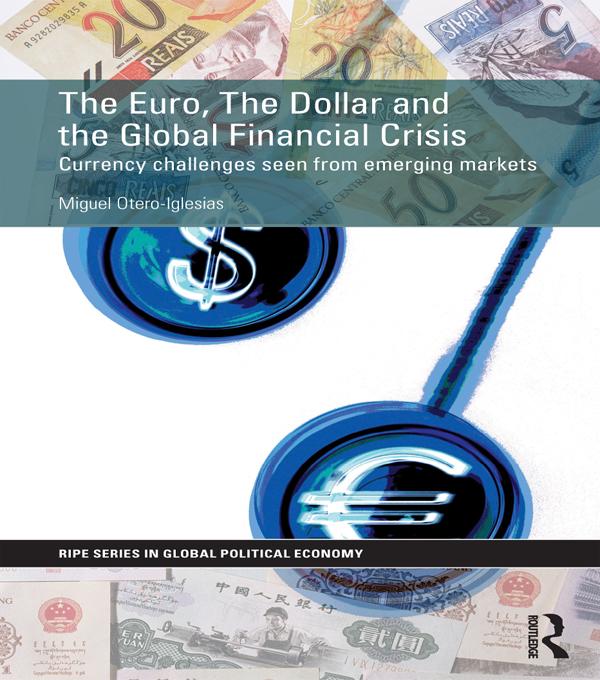
This book analyses how financial elites in key dollar-holding emerging markets perceive the contest between the euro and the dollar for global currency status. It also assesses how far the Eurozone has gone in challenging US hegemony in monetary affairs through the prism of these elites.
Drawing on Chartalist and Constructivist theories of money, the author provides a systematic approach to studying global currency dynamics and presents extensive original empirical data on financial elites in China, Saudi Arabia, the UAE and Brazil. The author demonstrates, amongst other things, how the gradual ascendance of a structurally flawed currency like the euro has highlighted the weaknesses of the dollar ad how the euro has demonstrated that sovereignty sharing in monetary affairs is possible and that the international monetary system can be a multicurrency and multilateral system.
In this highly innovative and important book, Otero-Iglesias shows the importance of studying financial elites in Brazil, China and the GCC countries in order to understand the full impact, material and ideational, of the euro in the transformation of the IMS. It will be vital reading for students and scholars of International Political Economy, International Economics, International Finance, Economic History, Economic Sociology, International Relations, Comparative Political Economy and Comparative Politics.
Pay easily by card, Klarna, Apple Pay or Google Pay. Not happy? You always have a 14-day money-back guarantee. Read more in our terms. If you have any questions, email us at hello@memmo.org.
Memmo makes studying easier – wherever you are in the world. We bring your course books and smart study tools together in one place: summaries, quizzes, podcasts and flashcards. Plus Ted, your study buddy who answers anything you wonder. Over 50,000 students already study here – built to help you learn faster and stress less.