
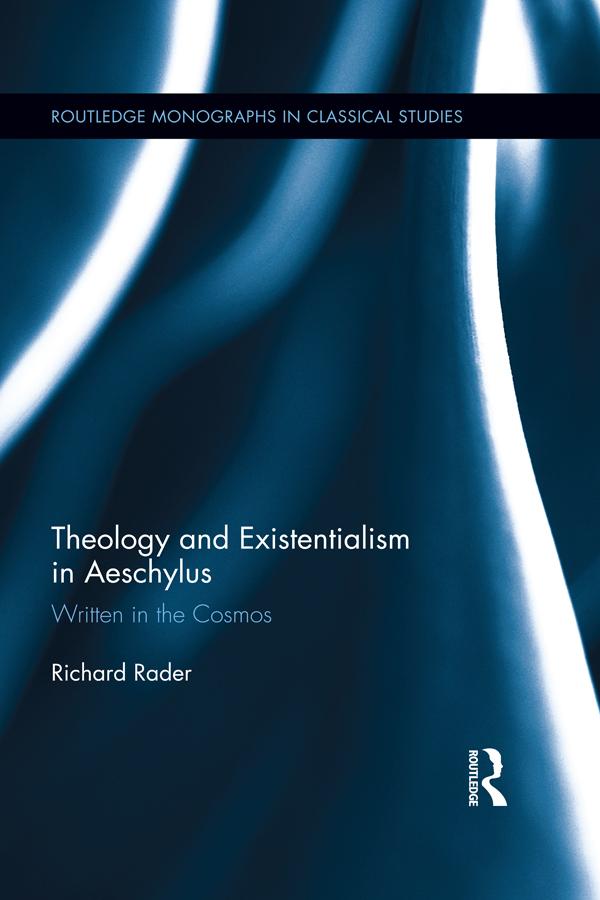
Theology and Existentialism in Aeschylus revivifies the complex question of fate and freedom in the tragedies of the famous Greek playwright. Starting with Sartre’s insights about radical existential freedom, this book shows that Aeschylus is concerned with the ethical ramifications of surrendering our lives to fatalism (gods, curses, inherited guilt) and thoroughly interrogates the plays for their complex insights into theology and human motivation. But can we reconcile the radical freedom of existentialism and the seemingly fatal world of tragedy, where gods and curses and necessities wreak havoc on individual autonomy? If forces beyond our control or comprehension are influencing our lives, what happens to choice? How are we to conceive of ethics in a world studiously indifferent to our choices?
In this book, author Ric Rader demonstrates that few understood the importance of these questions better than the tragedians, whose literature dealt with a central theological concern: What is a god? And how does god affect, impinge upon, or even enable human freedom? Perhaps more importantly: If god is dead, is everything possible, or nothing? Tragedy holds the preeminent position with regard to these questions, and Aeschylus, our earliest surviving tragedian, is the best witness to these complex theological issues.
Pay easily by card, Klarna, Apple Pay or Google Pay. Not happy? You always have a 14-day money-back guarantee. Read more in our terms. If you have any questions, email us at hello@memmo.org.
Memmo makes studying easier – wherever you are in the world. We bring your course books and smart study tools together in one place: summaries, quizzes, podcasts and flashcards. Plus Ted, your study buddy who answers anything you wonder. Over 50,000 students already study here – built to help you learn faster and stress less.