
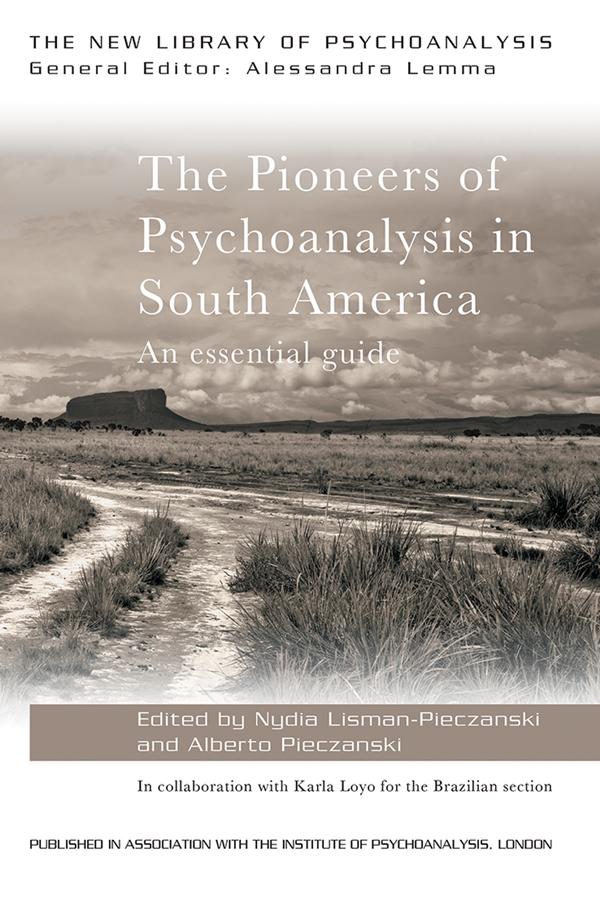
Shortly before and during World War II many European psychoanalysts found refuge in South America, concentrated in Buenos Aires. Here, together with local professionals, they created a strong, creative and productive psychoanalytic movement that in turn gave birth to theoretical and clinical contributions that transformed psychoanalysis, psychology, medicine and culture in South America. The Pioneers of Psychoanalysis in South America is a collection of those pioneers’ papers, and introduces the reader to a body of ideas and advancements, many of which have had limited and piecemeal exposure within the psychoanalytic community in the rest of the world until now.
The editors Nydia Lisman-Pieczanski and Alberto Pieczanski present original papers and essays, many of which have never before been published in English; those that have been translated were rarely presented in context. Each one of the chapters is accompanied by a scholarly introduction written by psychoanalysts, many of whom personally knew the pioneers and their oeuvres in depth, tracing the roots of their ideas in the European analytic schools.
The Pioneers of Psychoanalysis in South America is divided into six main sections:
- Psychoanalytic process
- Psychoanalytic technique
- Metapsychology
- Psychoanalysis of children
- Culture and society
- Psychosomatic medicine.
Nydia Lisman-Pieczanski and Alberto Pieczanski provide a coherent guide to the seminal ideas and practices of the South American psychoanalysts who have made major theoretical and clinical contributions to the advancement of the psychoanalytic discipline. The chapters present the material in a way that is accessible to psychoanalysts from across the globe and will enable them to incorporate the ideas and practices outlined here into their everyday psychoanalytic work. It will also be of interest to psychoanalytic psychotherapists, academics interested in the history and development of psychoanalytic ideas and psychoanalysis, and advanced students.
The following link leads to an video interview featuring Nydia Lisman-Pieczanski and Alberto Pieczanski by the Washington Center for Psychoanalysis for the History Project, where they open up about their stories, their marriage, and their new book:
https://www.routledge.com/posts/8996
Pay easily by card, Klarna, Apple Pay or Google Pay. Not happy? You always have a 14-day money-back guarantee. Read more in our terms. If you have any questions, email us at hello@memmo.org.
Memmo makes studying easier – wherever you are in the world. We bring your course books and smart study tools together in one place: summaries, quizzes, podcasts and flashcards. Plus Ted, your study buddy who answers anything you wonder. Over 50,000 students already study here – built to help you learn faster and stress less.