
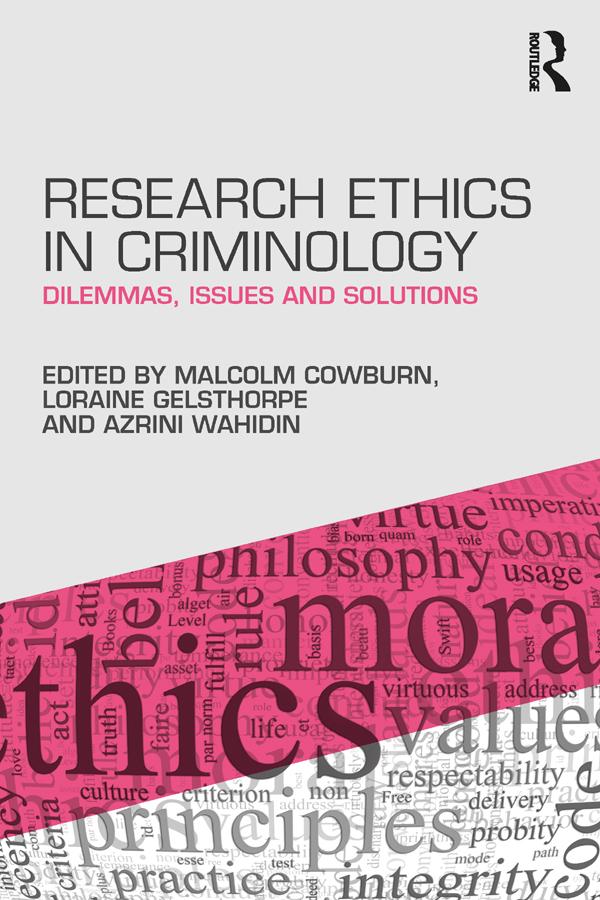
Ethical principles and concerns are at the heart of criminological research and can arise at the planning, implementation and reporting stages. It is vital that researchers are aware of the issues involved so that they can make informed decisions about the implications of certain choices. This cutting-edge book charts the changing topography of ethics, governance and accountability for social science research in criminology, contributes to the developing discourse on research ethics and demonstrates the importance as to why research ethics should be taken seriously. Bringing together a range of experts who consider both quantitative and qualitative methodologies. This book examines the key issues and challenges of ethical research. Topics covered include:
- the measures in place to ensure ethical research practice for social scientists;
- the relationship between state funding and research findings;
- the challenge of researching sensitive areas;
- the changing face of governance and accountability for academic criminology.
Research Ethics in Criminology is a comprehensive and accessible text that is ideal for students studying criminological research methods. Supplementary material includes key points, chapter summaries, critical thinking questions, key definitions, case examples, and recommendations for further reading. This book will provide a thorough grounding in the ethical issues faced by researchers, as well as an understanding of the role and purpose of ethics committees.
Pay easily by card, Klarna, Apple Pay or Google Pay. Not happy? You always have a 14-day money-back guarantee. Read more in our terms. If you have any questions, email us at hello@memmo.org.
Memmo makes studying easier – wherever you are in the world. We bring your course books and smart study tools together in one place: summaries, quizzes, podcasts and flashcards. Plus Ted, your study buddy who answers anything you wonder. Over 50,000 students already study here – built to help you learn faster and stress less.