
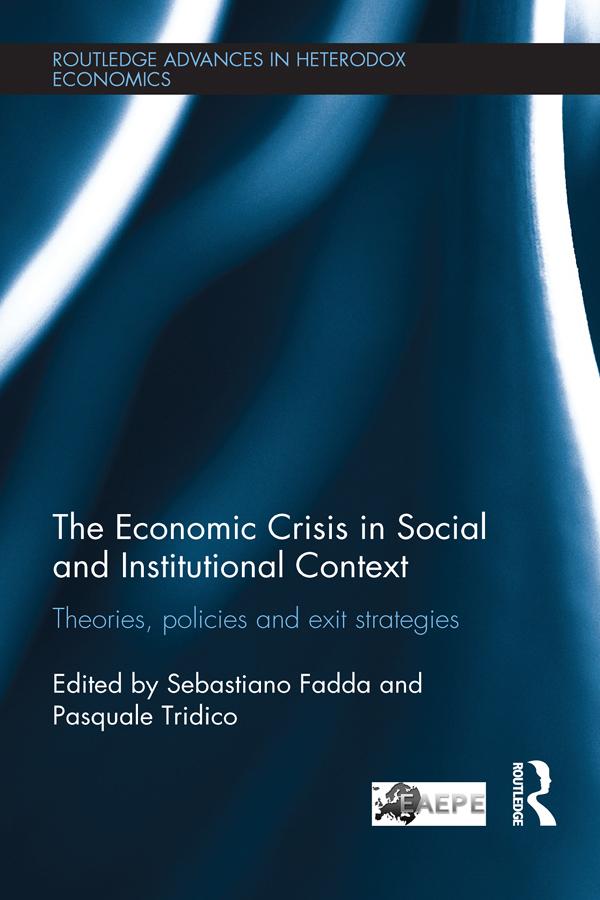
This book explores the foundations of the current economic crisis. Offering a heterodox approach to interpretation it examines the policies implemented before and during the crisis, and the main institutions that shaped the model of advanced economies, particularly in the last two decades.
The first part of the book provides a theoretical analysis of the crisis. The roots of the ‘great recession’ are divided into fundamentals with origins in financial liberalisation, financial innovation and income distribution, and complementary or contributory factors such as the international imbalances, the monetary policy,and the role of credit rating agencies. Part II suggests various paths to recovery while emphasising that it will be necessary to develop alternative strategies for sustainable economic recovery and growth. These strategies will require genuine political support and a new 'great European vision' to address major issues concerning the EU such as unemployment, structural regional differences and federalism.
Drawing on various schools of thought, this book explains the complexities of the crisis through a wider evolutionary-institutional and heterodox framework.
Pay easily by card, Klarna, Apple Pay or Google Pay. Not happy? You always have a 14-day money-back guarantee. Read more in our terms. If you have any questions, email us at hello@memmo.org.
Memmo makes studying easier – wherever you are in the world. We bring your course books and smart study tools together in one place: summaries, quizzes, podcasts and flashcards. Plus Ted, your study buddy who answers anything you wonder. Over 50,000 students already study here – built to help you learn faster and stress less.