
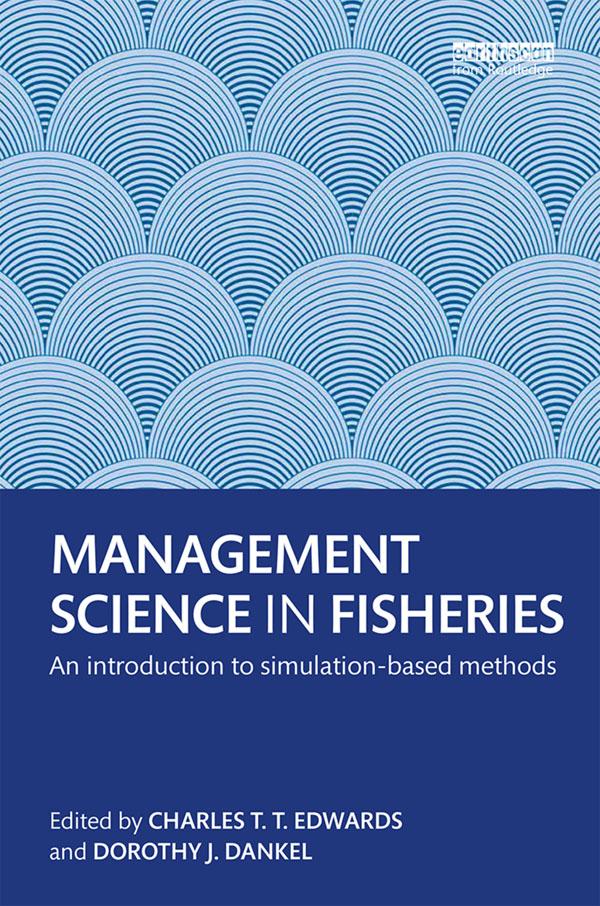
A key goal of fisheries management is to regulate extractive pressure on a resource so as to ensure social, economic and ecological sustainability. This text provides an accessible entry point for students and professionals to management science as developed in fisheries, in order to facilitate uptake of the latest ideas and methods.
Traditional management approaches have relied upon a stock assessment based on existing understanding of resource status and dynamics, and a prediction of the likely future response to a static management proposal. However all such predictions include an inherent degree of uncertainty, and the last few decades have seen the emergence of an adaptive approach that uses feedback control to account for unknown future behaviour. Feedback is achieved via a control rule, which defines a relationship between perceived status of the resource and a management action. Evaluations of such rules usually include computer simulation testing across a broad range of uncertainties, so that an appropriate and robust rule can be selected by stakeholders and managers. The book focuses on this approach, which is usually referred to as Management Strategy Evaluation.
The book is enriched by case study examples from different parts of the world, as well as insights into the theory and practice from those actively involved in the science of fisheries management.
Pay easily by card, Klarna, Apple Pay or Google Pay. Not happy? You always have a 14-day money-back guarantee. Read more in our terms. If you have any questions, email us at hello@memmo.org.
Memmo makes studying easier – wherever you are in the world. We bring your course books and smart study tools together in one place: summaries, quizzes, podcasts and flashcards. Plus Ted, your study buddy who answers anything you wonder. Over 50,000 students already study here – built to help you learn faster and stress less.