
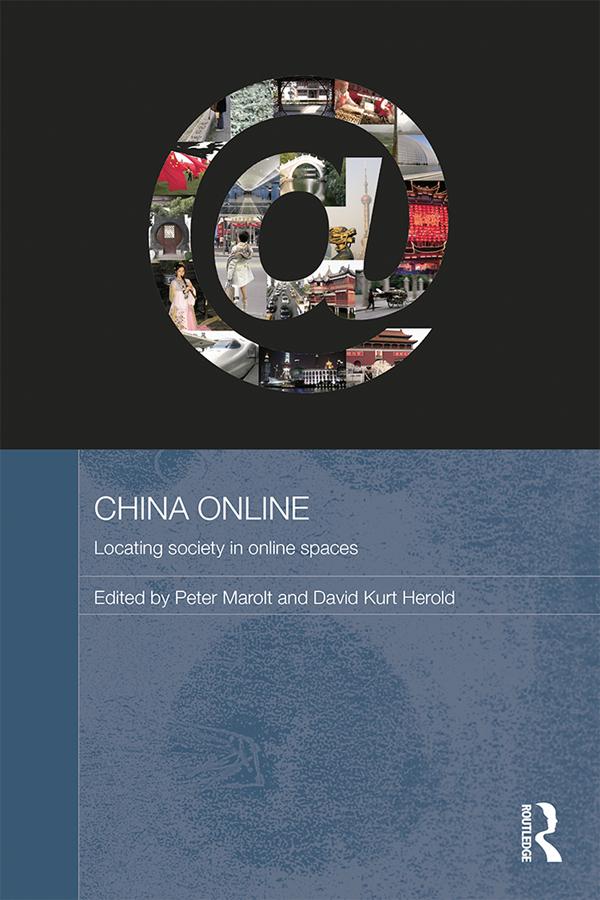
The Chinese internet is driving change across all facets of social life, and scholars have grown mindful that online and offline spaces have become interdependent and inseparable dimensions of social, political, economic, and cultural activity. This book showcases the richness and diversity of Chinese cyberspaces, conceptualizing online and offline China as separate but inter-connected spaces in which a wide array of people and groups act and interact under the gaze of a seemingly monolithic authoritarian state. The cyberspaces comprising "online China" are understood as spaces for interaction and negotiation that influence "offline China". The book argues that these spaces allow their users greater "freedoms" despite ubiquitous control and surveillance by the state authorities. The book is a sequel to the editors’ earlier work, Online Society in China: Creating, Celebrating and Instrumentalising the Online Carnival (Routledge, 2011).
Pay easily by card, Klarna, Apple Pay or Google Pay. Not happy? You always have a 14-day money-back guarantee. Read more in our terms. If you have any questions, email us at hello@memmo.org.
Memmo makes studying easier – wherever you are in the world. We bring your course books and smart study tools together in one place: summaries, quizzes, podcasts and flashcards. Plus Ted, your study buddy who answers anything you wonder. Over 50,000 students already study here – built to help you learn faster and stress less.