
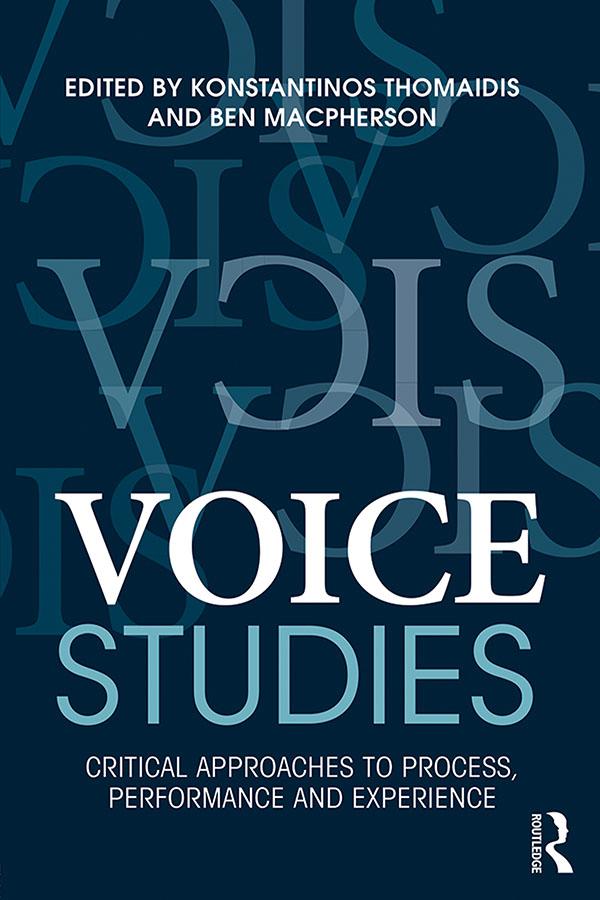
Voice Studies brings together leading international scholars and practitioners, to re-examine what voice is, what voice does, and what we mean by "voice studies" in the process and experience of performance. This dynamic and interdisciplinary publication draws on a broad range of approaches, from composing and voice teaching through to psychoanalysis and philosophy, including:
- voice training from the Alexander Technique to practice-as-research;
- operatic and extended voices in early baroque and contemporary underwater singing;
- voices across cultures, from site-specific choral performance in Kentish mines and Australian sound art, to the laments of Kraho Indians, Korean pansori and Javanese wayang;
- voice, embodiment and gender in Robertson’s 1798 production of Phantasmagoria, Cathy Berberian radio show, and Romeo Castellucci’s theatre;
- perceiving voice as a composer, listener, or as eavesdropper;
- voice, technology and mobile apps.
With contributions spanning six continents, the volume considers the processes of teaching or writing for voice, the performance of voice in theatre, live art, music, and on recordings, and the experience of voice in acoustic perception and research. It concludes with a multifaceted series of short provocations that simply revisit the core question of the whole volume: what is voice studies?
Pay easily by card, Klarna, Apple Pay or Google Pay. Not happy? You always have a 14-day money-back guarantee. Read more in our terms. If you have any questions, email us at hello@memmo.org.
Memmo makes studying easier – wherever you are in the world. We bring your course books and smart study tools together in one place: summaries, quizzes, podcasts and flashcards. Plus Ted, your study buddy who answers anything you wonder. Over 75,000 students already study here – built to help you learn faster and stress less.