
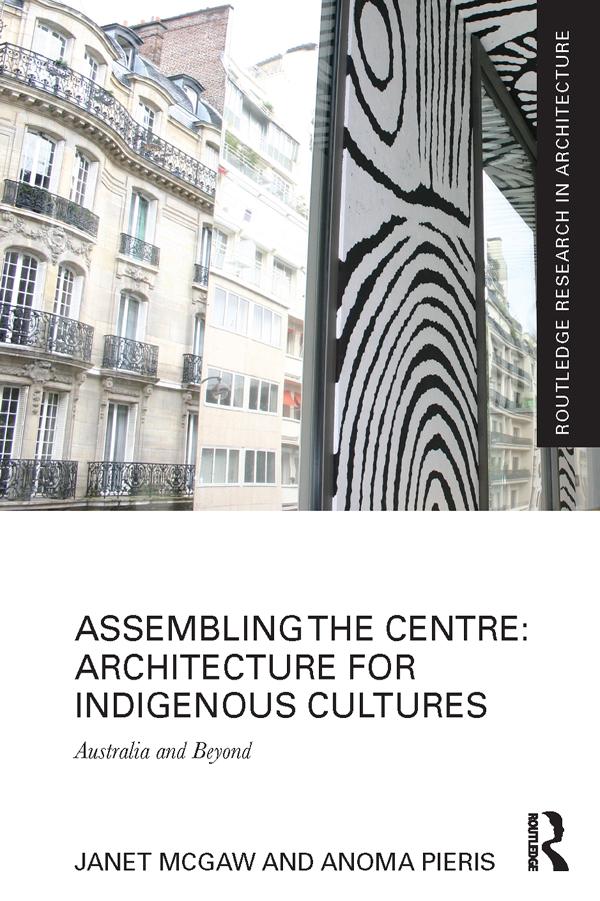
Metropolitan Indigenous Cultural Centres have become a focal point for making Indigenous histories and contemporary cultures public in settler-colonial societies over the past three decades. While there are extraordinary success stories, there are equally stories that cause concern: award-winning architecturally designed Indigenous cultural centres that have been abandoned; centres that serve the interests of tourists but fail to nourish the cultural interests of Indigenous stakeholders; and places for vibrant community gathering that fail to garner the economic and politic support to remain viable. Indigenous cultural centres are rarely static. They are places of ‘emergence’, assembled and re-assembled along a range of vectors that usually lie beyond the gaze of architecture. How might the traditional concerns of architecture – site, space, form, function, materialities, tectonics – be reconfigured to express the complex and varied social identities of contemporary Indigenous peoples in colonised nations?
This book, documents a range of Indigenous Cultural Centres across the globe and the processes that led to their development. It explores the possibilities for the social and political project of the Cultural Centre that architecture both inhibits and affords. Whose idea of architecture counts when designing Indigenous Cultural Centres? How does architectural history and contemporary practice territorialise spaces of Indigenous occupation? What is architecture for Indigenous cultures and how is it recognised?
This ambitious and provocative study pursues a new architecture for colonised Indigenous cultures that takes the politics of recognition to its heart. It advocates an ethics of mutual engagement as a crucial condition for architectural projects that design across cultural difference. The book’s structure, method, and arguments are dialogically assembled around narratives told by Indigenous people of their pursuit of public recognition, spatial justice, and architectural presence in settler dominated societies. Possibilities for decolonising architecture emerge through these accounts.
Pay easily by card, Klarna, Apple Pay or Google Pay. Not happy? You always have a 14-day money-back guarantee. Read more in our terms. If you have any questions, email us at hello@memmo.org.
Memmo makes studying easier – wherever you are in the world. We bring your course books and smart study tools together in one place: summaries, quizzes, podcasts and flashcards. Plus Ted, your study buddy who answers anything you wonder. Over 75,000 students already study here – built to help you learn faster and stress less.