
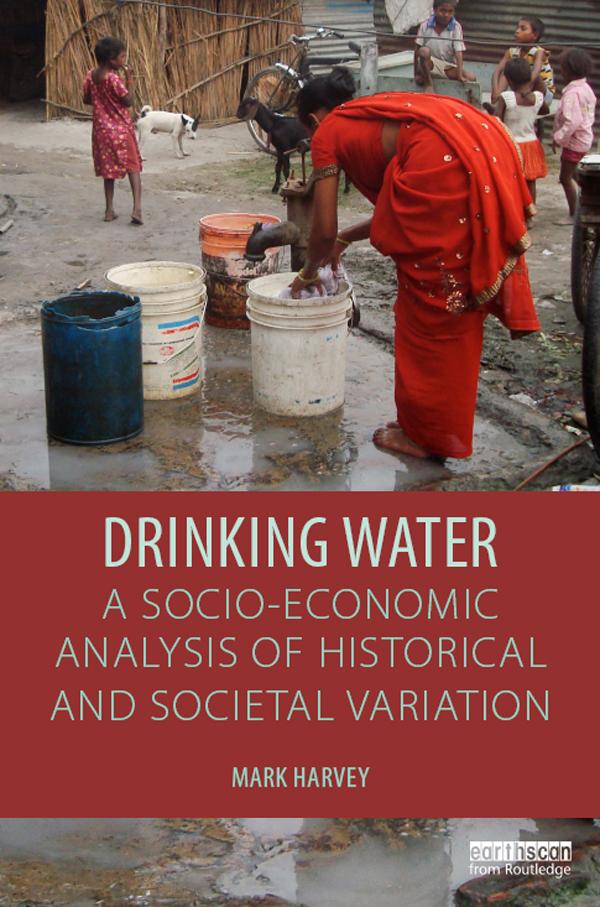
In this fascinating and challenging work, the author analyses the way water for drinking is produced, distributed, owned, acquired, and consumed in contrasting ways in different settings. From the taken-for-granted, all-purpose water, flowing out of taps in advanced economies to extreme inequalities of access to water of variable qualities, drinking water tells its own interesting story, but also reflects some of the centrally important characteristics of the state and economies of the different countries. From sparkling mineral water in Germany, to drinking water garages in Taiwan, from water tankers in Mexico City to street vendors in Delhi markets, comparisons are made to stretch our understanding of what we mean by ‘an economy’, quality, and property rights, of water.
In addition, the study of socio-economics of drinking water provides a route into understanding interactions between polity, economy and nature. One of the major themes of the book is to analyse the ‘sociogenic’ nature of sustainability crises of economies of water in their environmental settings: epidemics, droughts, pollution, land subsidences and floods. Overall it develops an economic sociology, neo-Polanyian approach in a comparative and historical exploration of water for domestic consumption.
Pay easily by card, Klarna, Apple Pay or Google Pay. Not happy? You always have a 14-day money-back guarantee. Read more in our terms. If you have any questions, email us at hello@memmo.org.
Memmo makes studying easier – wherever you are in the world. We bring your course books and smart study tools together in one place: summaries, quizzes, podcasts and flashcards. Plus Ted, your study buddy who answers anything you wonder. Over 50,000 students already study here – built to help you learn faster and stress less.