
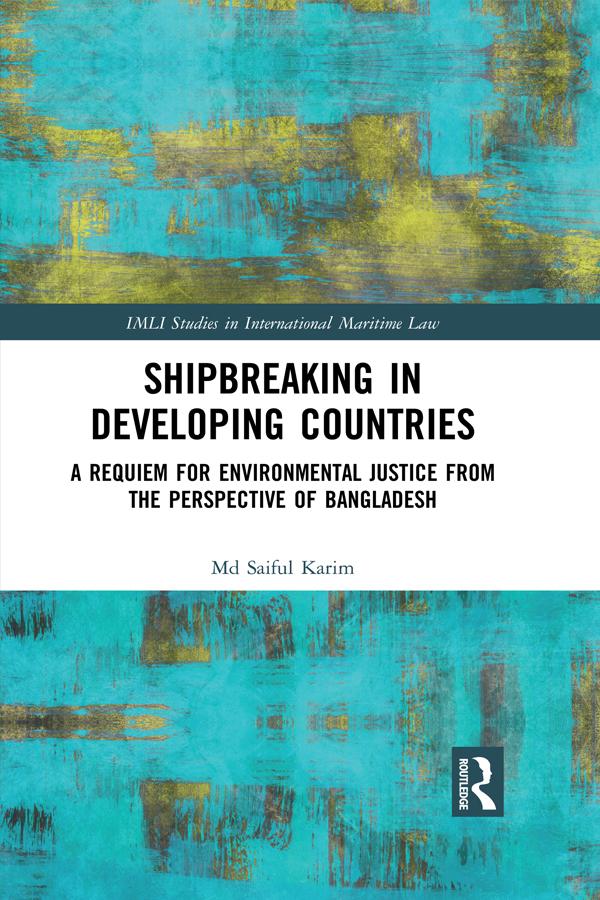
This book explores the process of shipbreaking in developing countries, with a particular focus on Bangladesh.
In the past, shipbreaking (the disposal of obsolete ships) was a very common industrial activity in many developed countries. However, due to stringent domestic environmental and labour laws it is almost impossible for the increasing number of vessels to be disposed of domestically, and now developing nations including Bangladesh, China, India, Turkey and Pakistan regularly participate in this activity. The shipbreaking yards in these countries are not only detrimental to the marine and coastal environment but also represent significant health hazards to local people and workers. Given the global importance of the issue, an effective legal and institutional framework for a sustainable operation of the shipbreaking industry is desperately needed.
Sitting at the intersection of three distinct fields – environmental justice, international environmental law and international maritime law – this book offers an innovative take on the issues surrounding the shipbreaking process. Drawing on the case study of Bangladesh due to its prominence in the shipbreaking industry, the author implements an environmental justice framework to examine the issues of sustainability surrounding shipbreaking, and analyses the relationship between social development, economic development and environmental protection. Maritime perspectives of environmental justice will also be highlighted through a discussion of the International Maritime Organization’s role in the implementation of the Hong Kong Convention in developing countries.
This book will be of great interest to scholars of environmental justice, international maritime law and international environmental law.
Pay easily by card, Klarna, Apple Pay or Google Pay. Not happy? You always have a 14-day money-back guarantee. Read more in our terms. If you have any questions, email us at hello@memmo.org.
Memmo makes studying easier – wherever you are in the world. We bring your course books and smart study tools together in one place: summaries, quizzes, podcasts and flashcards. Plus Ted, your study buddy who answers anything you wonder. Over 50,000 students already study here – built to help you learn faster and stress less.