
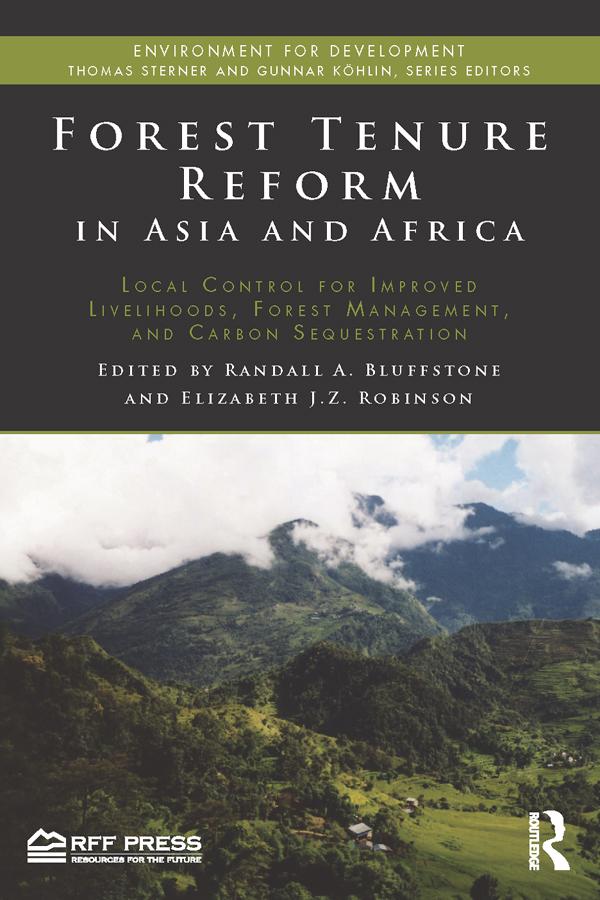
Forest tenure reforms are occurring in many developing countries around the world. These reforms typically include devolution of forest lands to local people and communities, which has attracted a great deal of attention and interest. While the nature and level of devolution vary by country, all have potentially important implications for resource allocation, local ecosystem services, livelihoods and climate change.
This book helps students, researchers and professionals to understand the importance and implications of these reforms for local environmental quality, climate change, and the livelihoods of villagers, who are often poor. It is shown that local forest management can often be more successful than top-down management of common pool forest resources. The relationship of local forest tenure reform to the important climate change initiative REDD+ is also considered.
The work includes a number of generic chapters and also detailed case studies from China, Ethiopia, Kenya, Nepal, Tanzania and Uganda. Using specific examples and a wide variety of disciplinary perspectives, including quantitative and qualitative analytical methods, the book provides an authoritative and critical picture of local forest reforms in light of the key challenges humanity faces today.
Pay easily by card, Klarna, Apple Pay or Google Pay. Not happy? You always have a 14-day money-back guarantee. Read more in our terms. If you have any questions, email us at hello@memmo.org.
Memmo makes studying easier – wherever you are in the world. We bring your course books and smart study tools together in one place: summaries, quizzes, podcasts and flashcards. Plus Ted, your study buddy who answers anything you wonder. Over 50,000 students already study here – built to help you learn faster and stress less.