
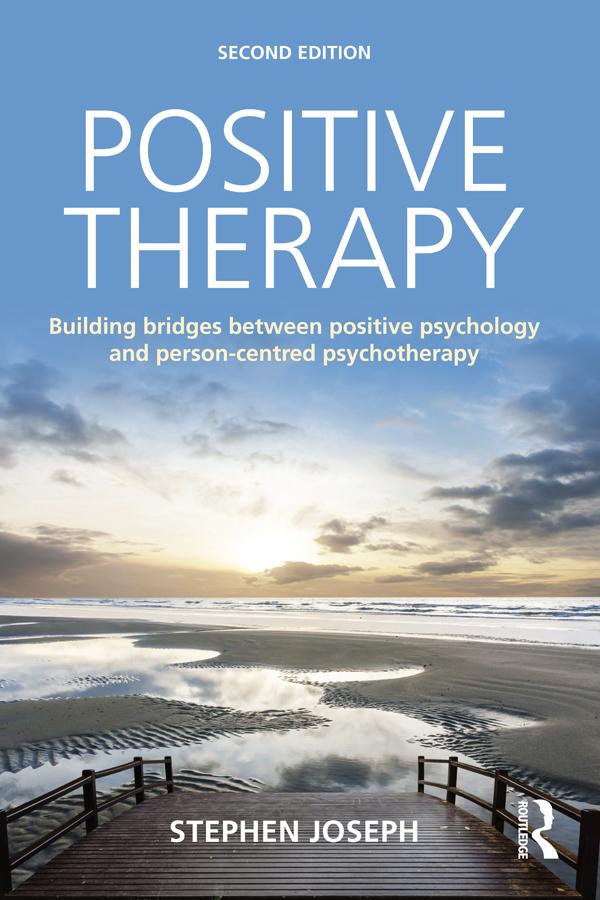
The applications of positive psychology are different from traditional interventions in therapy in that they are focused on building strength, resilience and well-being rather than being restricted to simply treating disorder. Since the publication of the first edition of Positive Therapy, there is now a comprehensive body of applied positive psychology research to which practitioners may turn in order to inform their own practice, and that sees its purpose as the facilitation of human flourishing and optimal functioning.
However, much of this research and its implications are only now becoming more widely understood in counselling and psychotherapy. This new and expanded edition of Positive Therapy shows how the latest thinking in positive psychology can be applied to psychotherapeutic practice, and specifically to person-centred therapy. Making the links between positive psychology and psychotherapy explicit, Stephen Joseph describes the new tools that practitioners can draw upon to help and facilitate positive functioning in their clients. New material includes:
- An update of the latest positive psychology research
- A new preface, explaining how positive psychology principles can now be applied to therapeutic practice
- Focus on positive psychology measurement tools
Positive Therapy will be essential reading for all psychotherapists, counsellors, social workers, coaches, psychologists and trainees interested in exploring how they engage with clients, and the implications of this engagement in practice.
Pay easily by card, Klarna, Apple Pay or Google Pay. Not happy? You always have a 14-day money-back guarantee. Read more in our terms. If you have any questions, email us at hello@memmo.org.
Memmo makes studying easier – wherever you are in the world. We bring your course books and smart study tools together in one place: summaries, quizzes, podcasts and flashcards. Plus Ted, your study buddy who answers anything you wonder. Over 50,000 students already study here – built to help you learn faster and stress less.