
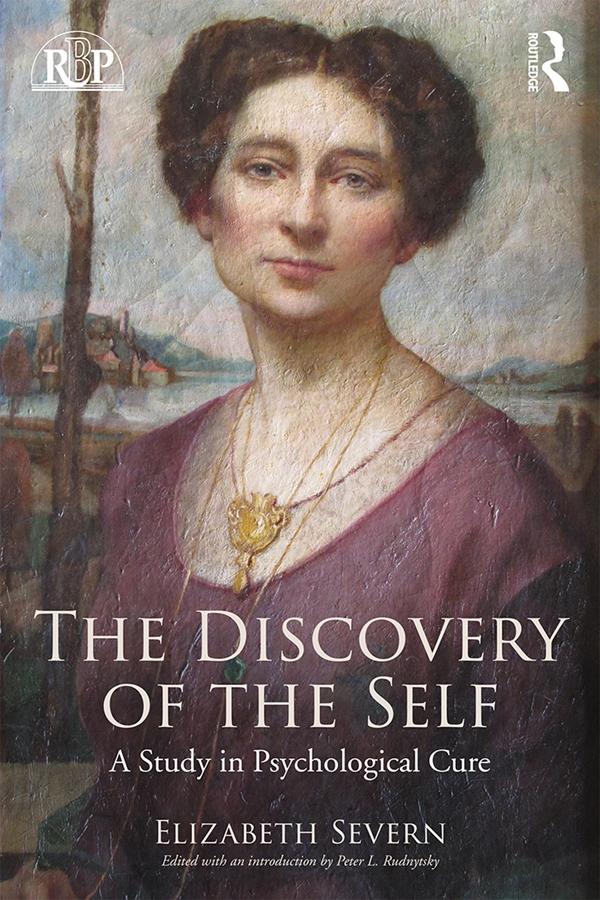
Elizabeth Severn, known as "R.N." in Sandor Ferenczi’s Clinical Diary, was Ferenczi’s analysand for eight years, the patient with whom he conducted his controversial experiment in mutual analysis, and a psychoanalyst in her own right who had a transformative influence on his work. The Discovery of the Self is the distillation of that experience and allows us to hear the voice of one of the most important patients in the history of psychoanalysis. However, Freud branded Severn Ferenczi’s "evil genius" and her name does not appear in Ernest Jones’s biography, so she has remained largely unknown until now. This book is a reissue of Severn’s landmark work of 1933, together with an introduction by Peter L. Rudnytsky that sets out the unrecognized importance of her thinking both for the development of psychoanalysis and for contemporary theory.
Inspired by the realization that Severn has embedded disguised case histories both of herself and of Ferenczi, as well as of her daughter Margaret, Rudnytsky shows how The Discovery of the Self contains "the other side of the story" of mutual analysis and is thus an indispensable companion volume to the Clinical Diary. A full partner in Ferenczi’s rehabilitation of trauma theory and champion of the view that the analyst must participate in the patient’s reliving of past experiences, Severn emerges as the most profound conduit for Ferenczi’s legacy in the United States, if not in the entire world.
Lacking any institutional credentials and once completely marginalized, Elizabeth Severn can at long last be given her due as a formidable psychoanalyst. Newly available for the first time in more than eighty years, The Discovery of the Self is simultaneously an engaging introduction to psychotherapy that will appeal to general readers as well as a sophisticated text to be savored by psychoanalytic scholars and clinicians as a "prequel" to the works of Heinz Kohut and a neglected classic of relational psychoanalysis.
Pay easily by card, Klarna, Apple Pay or Google Pay. Not happy? You always have a 14-day money-back guarantee. Read more in our terms. If you have any questions, email us at hello@memmo.org.
Memmo makes studying easier – wherever you are in the world. We bring your course books and smart study tools together in one place: summaries, quizzes, podcasts and flashcards. Plus Ted, your study buddy who answers anything you wonder. Over 50,000 students already study here – built to help you learn faster and stress less.