
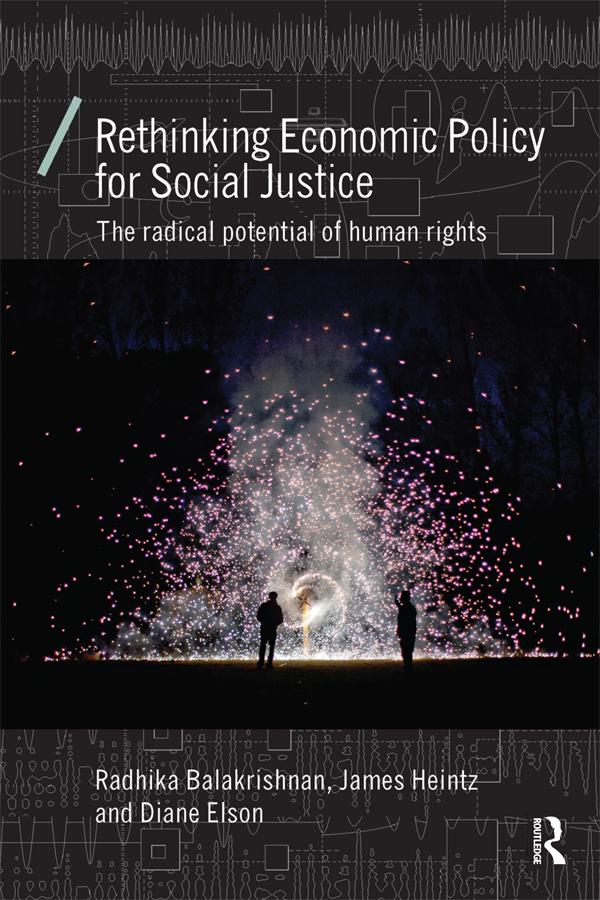
The dominant approach to economic policy has so far failed to adequately address the pressing challenges the world faces today: extreme poverty, widespread joblessness and precarious employment, burgeoning inequality, and large-scale environmental threats. This message was brought home forcibly by the 2008 global economic crisis.
Rethinking Economic Policy for Social Justice shows how human rights have the potential to transform economic thinking and policy-making with far-reaching consequences for social justice. The authors make the case for a new normative and analytical framework, based on a broader range of objectives which have the potential to increase the substantive freedoms and choices people enjoy in the course of their lives and not on not upon narrow goals such as the growth of gross domestic product. The book covers a range of issues including inequality, fiscal and monetary policy, international development assistance, financial markets, globalization, and economic instability. This new approach allows for a complex interaction between individual rights, collective rights and collective action, as well as encompassing a legal framework which offers formal mechanisms through which unjust policy can be protested.
This highly original and accessible book will be essential reading for human rights advocates, economists, policy-makers and those working on questions of social justice.
Pay easily by card, Klarna, Apple Pay or Google Pay. Not happy? You always have a 14-day money-back guarantee. Read more in our terms. If you have any questions, email us at hello@memmo.org.
Memmo makes studying easier – wherever you are in the world. We bring your course books and smart study tools together in one place: summaries, quizzes, podcasts and flashcards. Plus Ted, your study buddy who answers anything you wonder. Over 50,000 students already study here – built to help you learn faster and stress less.