
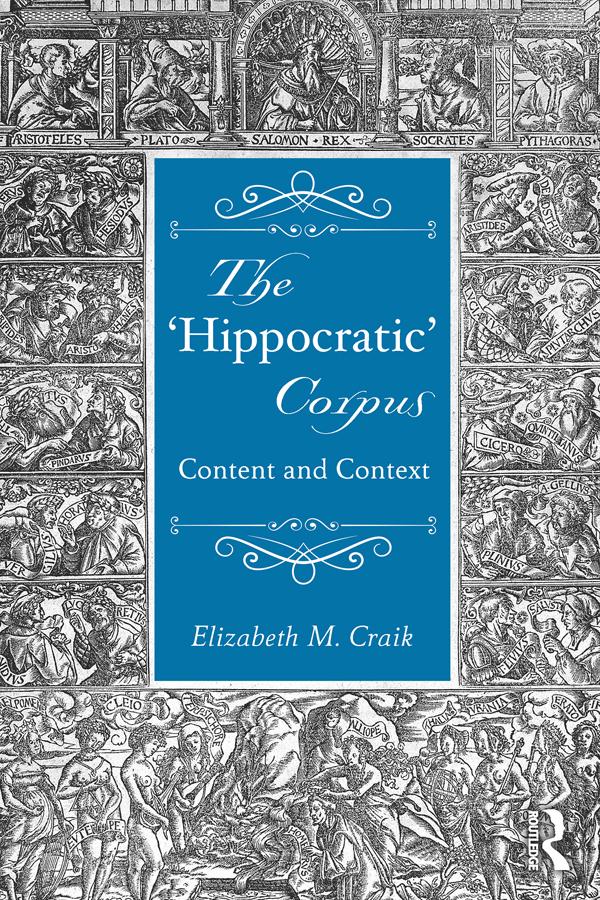
The Hippocratic Corpus comprises some sixty medical works of varying length, style and content. Collectively, this is the largest surviving body of early Greek prose. As such, it is an invaluable resource for scholars and students not only of ancient medicine but also of Greek life in general.
Hippocrates lived in the age of Socrates and most of the treatises seem to originate in the classical period. There is, however, no consensus on Hippocratic attribution. The ‘Hippocratic’ Corpus examines the works individually under the broad headings:
- content - each work is summarised for the reader
- comment - the substance and style of each work is discussed
- context is provided not just in relation to the corpus as a whole but also to the work’s wider relevance.
Whereas the scholar or student approaching, say, Euripides or Herodotus has a wealth of books available to provide introduction and orientation, no such study has existed for the Hippocratic Corpus. As The ‘Hippocratic’ Corpus has a substantial introduction, and as each work is summarised for the reader, it facilitates use and exploration of an important body of evidence by all interested in Greek medicine and society.
Elizabeth Craik is Honorary Professor at University of St Andrews and Visiting Professor at University of Newcastle, UK.
Pay easily by card, Klarna, Apple Pay or Google Pay. Not happy? You always have a 14-day money-back guarantee. Read more in our terms. If you have any questions, email us at hello@memmo.org.
Memmo makes studying easier – wherever you are in the world. We bring your course books and smart study tools together in one place: summaries, quizzes, podcasts and flashcards. Plus Ted, your study buddy who answers anything you wonder. Over 75,000 students already study here – built to help you learn faster and stress less.