
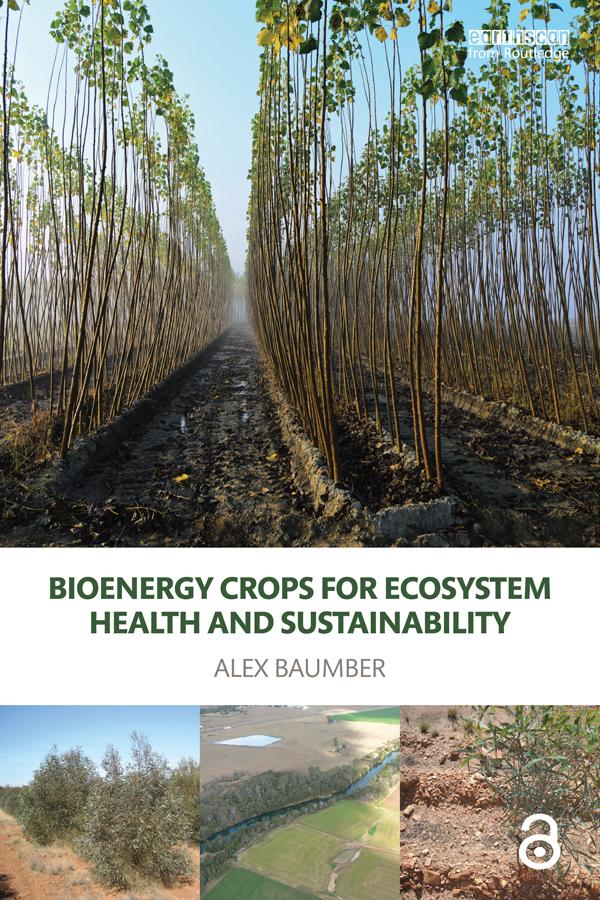
The growing of crops for bioenergy has been subject to much recent criticism, as taking away land which could be used for food production or biodiversity conservation. This book challenges some commonly-held ideas about biofuels, bioenergy and energy cropping, particularly that energy crops pose an inherent threat to ecosystems, which must be mitigated.
The book recognises that certain energy crops (e.g. oil palm for biodiesel) have generated sustainability concerns, but also asks the question "is there a better way?" of using energy crops to strategically enhance ecosystem functions. It draws on numerous case studies, including where energy crops have had negative outcomes as well as well as cases where energy crops have produced benefits for ecosystem health, such as soil and water protection from the cropping of willow and poplar in Europe and the use of mallee eucalypts to fight salinity in Western Australia. While exploring this central argument, the volume also provides a systematic overview of the socio-economic sustainability issues surrounding bioenergy.
Pay easily by card, Klarna, Apple Pay or Google Pay. Not happy? You always have a 14-day money-back guarantee. Read more in our terms. If you have any questions, email us at hello@memmo.org.
Memmo makes studying easier – wherever you are in the world. We bring your course books and smart study tools together in one place: summaries, quizzes, podcasts and flashcards. Plus Ted, your study buddy who answers anything you wonder. Over 50,000 students already study here – built to help you learn faster and stress less.