
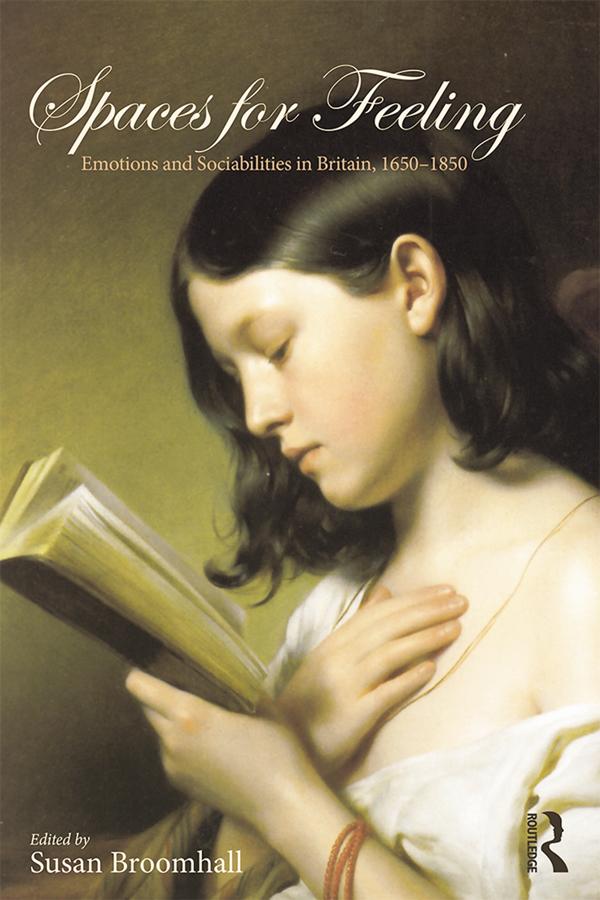
Spaces for Feeling explores how English and Scottish people experienced sociabilities and socialities from 1650 to 1850, and investigates their operation through emotional practices and particular spaces. The collection highlights the forms, practices, and memberships of these varied spaces for feeling in this two hundred year period and charts the shifting conceptualisations of emotions that underpinned them.
The authors employ historical, literary, and visual history approaches to analyse a series of literary and art works, emerging forms of print media such as pamphlet propaganda, newspapers, and periodicals, and familial and personal sources such as letters, in order to tease out how particular communities were shaped and cohered through distinct emotional practices in specific spaces of feeling. This collection studies the function of emotions in group formations in Britain during a period that has attracted widespread scholarly interest in the creation and meaning of sociabilities in particular. From clubs and societies to families and households, essays here examine how emotional practices could sustain particular associations, create new social communities and disrupt the capacity of a specific cohort to operate successfully.
This timely collection will be essential reading for students and scholars of the history of emotions.
Pay easily by card, Klarna, Apple Pay or Google Pay. Not happy? You always have a 14-day money-back guarantee. Read more in our terms. If you have any questions, email us at hello@memmo.org.
Memmo makes studying easier – wherever you are in the world. We bring your course books and smart study tools together in one place: summaries, quizzes, podcasts and flashcards. Plus Ted, your study buddy who answers anything you wonder. Over 50,000 students already study here – built to help you learn faster and stress less.