
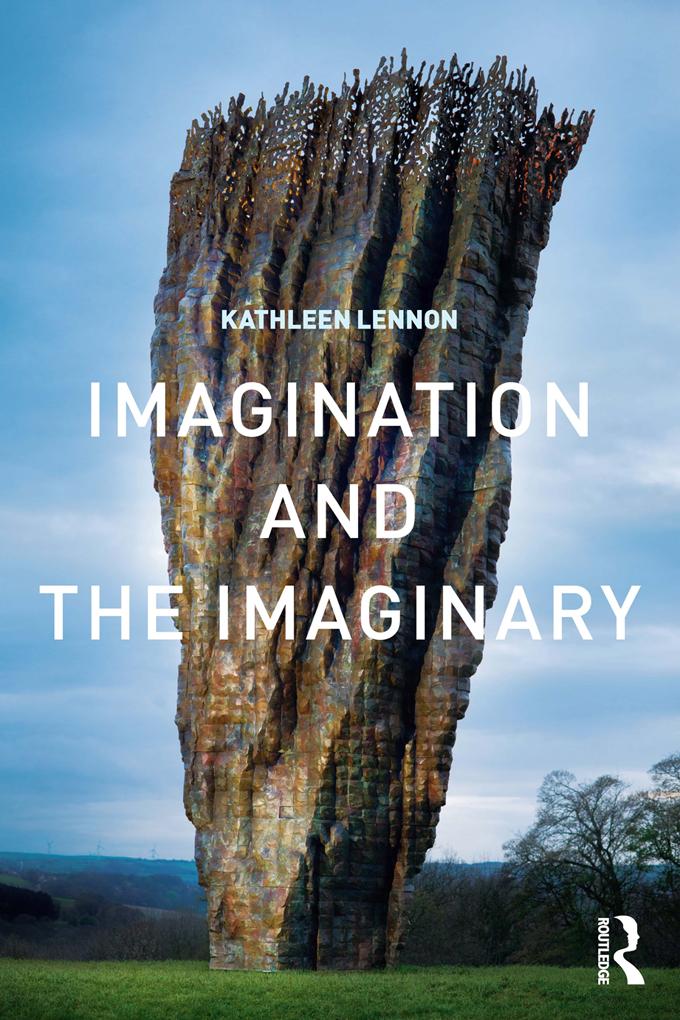
The concept of the imaginary is pervasive within contemporary thought, yet can be a baffling and often controversial term. In Imagination and the Imaginary, Kathleen Lennon explores the links between imagination - regarded as the faculty of creating images or forms - and the imaginary, which links such imagery with affect or emotion and captures the significance which the world carries for us.
Beginning with an examination of contrasting theories of imagination proposed by Hume and Kant, Lennon argues that the imaginary is not something in opposition to the real, but the very faculty through which the world is made real to us. She then turns to the vexed relationship between perception and imagination and, drawing on Kant, Merleau-Ponty and Sartre, explores some fundamental questions, such as whether there is a distinction between the perceived and the imagined; the relationship between imagination and creativity; and the role of the body in perception and imagination. Invoking also Spinoza and Coleridge, Lennon argues that, far from being a realm of illusion, the imaginary world is our most direct mode of perception. She then explores the role the imaginary plays in the formation of the self and the social world.
A unique feature of the volume is that it compares and contrasts a philosophical tradition of thinking about the imagination - running from Kant and Hume to Strawson and John McDowell - with the work of phenomenological, psychoanalytic, poststructuralist and feminist thinkers such as Merleau-Ponty, Sartre, Lacan, Castoriadis, Irigaray, Gatens and Lloyd. This makes Imagination and the Imaginary essential reading for students and scholars working in phenomenology, philosophy of perception, social theory, cultural studies and aesthetics.
Cover Image: Bronze Bowl with Lace, Ursula Von Rydingsvard, 2014. Courtesy the artist, Galerie Lelong and Yorkshire Sculpture Park. Photo Jonty Wilde.
Pay easily by card, Klarna, Apple Pay or Google Pay. Not happy? You always have a 14-day money-back guarantee. Read more in our terms. If you have any questions, email us at hello@memmo.org.
Memmo makes studying easier – wherever you are in the world. We bring your course books and smart study tools together in one place: summaries, quizzes, podcasts and flashcards. Plus Ted, your study buddy who answers anything you wonder. Over 50,000 students already study here – built to help you learn faster and stress less.