
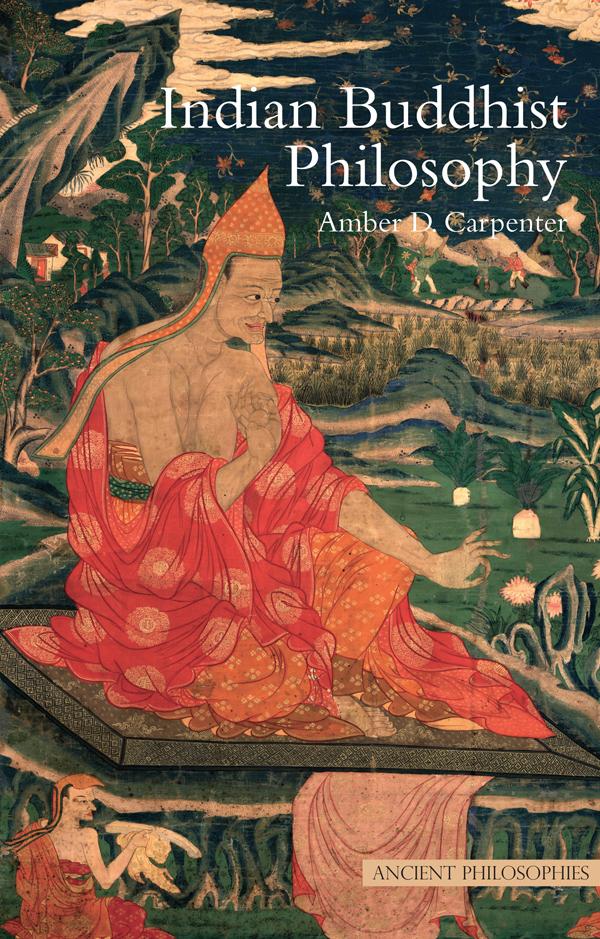
Organised in broadly chronological terms, this book presents the philosophical arguments of the great Indian Buddhist philosophers of the fifth century BCE to the eighth century CE. Each chapter examines their core ethical, metaphysical and epistemological views as well as the distinctive area of Buddhist ethics that we call today moral psychology. Throughout, this book follows three key themes that both tie the tradition together and are the focus for most critical dialogue: the idea of anatman or no-self, the appearance/reality distinction and the moral aim, or ideal. Indian Buddhist philosophy is shown to be a remarkably rich tradition that deserves much wider engagement from European philosophy. Carpenter shows that while we should recognise the differences and distances between Indian and European philosophy, its driving questions and key conceptions, we must resist the temptation to find in Indian Buddhist philosophy, some Other, something foreign, self-contained and quite detached from anything familiar. Indian Buddhism is shown to be a way of looking at the world that shares many of the features of European philosophy and considers themes central to philosophy understood in the European tradition.
Pay easily by card, Klarna, Apple Pay or Google Pay. Not happy? You always have a 14-day money-back guarantee. Read more in our terms. If you have any questions, email us at hello@memmo.org.
Memmo makes studying easier – wherever you are in the world. We bring your course books and smart study tools together in one place: summaries, quizzes, podcasts and flashcards. Plus Ted, your study buddy who answers anything you wonder. Over 50,000 students already study here – built to help you learn faster and stress less.
You might also like
Buy the book0