
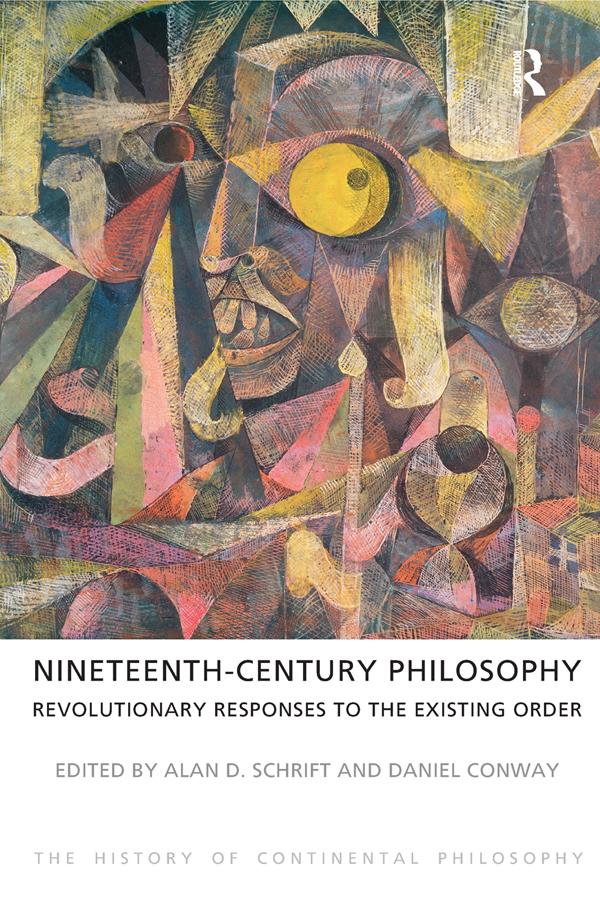
The second half of the 19th Century saw a revolution in both European politics and philosophy. Philosophical fervour reflected political fervour. Five great critics dominated the European intellectual scene: Ludwig Feuerbach, Karl Marx, Soren Kierkegaard, Fyodor Dostoevsky, and Friedrich Nietzsche. "Nineteenth-Century Philosophy" assesses the response of each of these leading figures to Hegelian philosophy - the dominant paradigm of the time - to the shifting political landscape of Europe and the United States, and also to the emerging critique of modernity itself. Both individually and collectively, these thinkers succeeded in revolutionizing theology, philosophy, psychology, and politics. The period also saw the emergence of new schools of thought and new disciplinary thinking. The volume covers the birth of sociology and the social sciences, the development of French spiritualism, the beginning of American pragmatism, the rise of science and mathematics, and the maturation of hermeneutics and phenomenology.
Pay easily by card, Klarna, Apple Pay or Google Pay. Not happy? You always have a 14-day money-back guarantee. Read more in our terms. If you have any questions, email us at hello@memmo.org.
Memmo makes studying easier – wherever you are in the world. We bring your course books and smart study tools together in one place: summaries, quizzes, podcasts and flashcards. Plus Ted, your study buddy who answers anything you wonder. Over 50,000 students already study here – built to help you learn faster and stress less.
You might also like
Buy the book0