
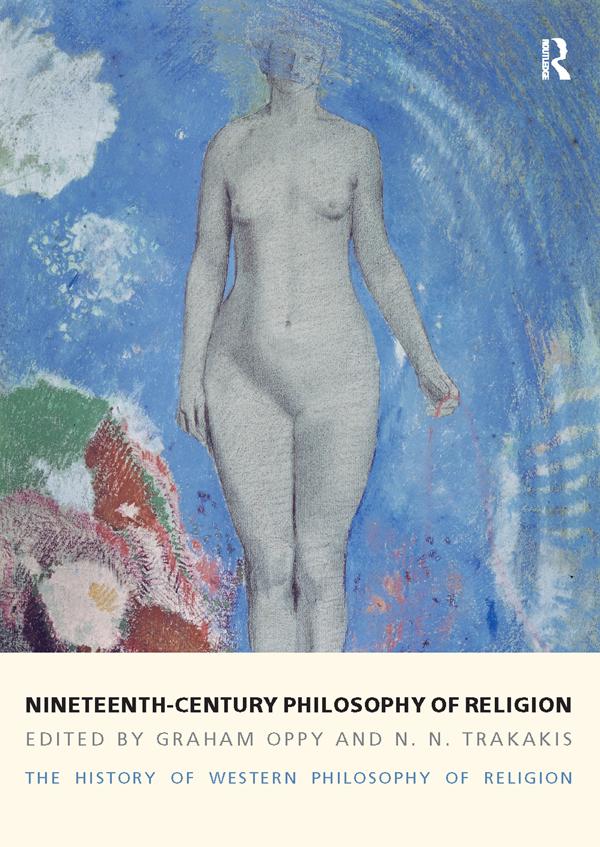
The nineteenth century was a turbulent period in the history of the philosophical scrutiny of religion. Major scholars - such as Hegel, Fichte, Schelling, Newman, Caird and Royce - sought to construct systematic responses to the Enlightenment critiques of religion carried out by Spinoza and Hume. At the same time, new critiques of religion were launched by philosophers such as Schopenhauer and Nietzsche and by scholars engaged in textual criticism, such as Schleiermacher and Dilthey. Over the course of the century, the work of Marx, Freud, Darwin and Durkheim brought the revolutionary perspectives of political economy, psychoanalysis, evolutionary theory and anthropology to bear on both religion and its study. These challenges played a major role in the shaping of twentieth-century philosophical thought about religion. "Nineteenth-Century Philosophy of Religion" will be of interest to scholars and students of Philosophy and Religion, and will serve as an authoritative guide for all who are interested in the debates that took place in this seminal period in the history of philosophical thinking about religion.
Pay easily by card, Klarna, Apple Pay or Google Pay. Not happy? You always have a 14-day money-back guarantee. Read more in our terms. If you have any questions, email us at hello@memmo.org.
Memmo makes studying easier – wherever you are in the world. We bring your course books and smart study tools together in one place: summaries, quizzes, podcasts and flashcards. Plus Ted, your study buddy who answers anything you wonder. Over 50,000 students already study here – built to help you learn faster and stress less.
You might also like
Buy the book0