
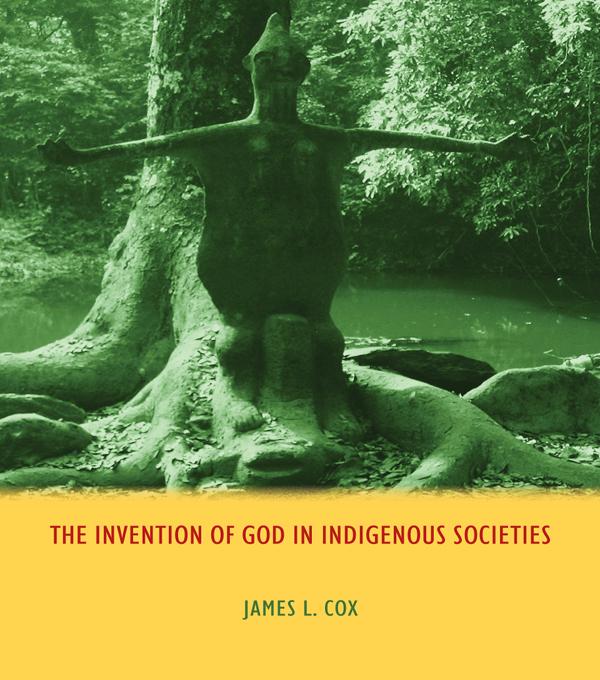
Indigenous societies around the world have been historically disparaged by European explorers, colonial officials and Christian missionaries. Nowhere was this more evident than in early descriptions of indigenous religions as savage, primitive, superstitious and fetishistic.
Liberal intellectuals, both indigenous and colonial, reacted to this by claiming that, before indigenous peoples ever encountered Europeans, they all believed in a Supreme Being. The Invention of God in Indigenous Societies argues that, by alleging that God can be located at the core of pre-Christian cultures, this claim effectively invents a tradition which only makes sense theologically if God has never left himself without a witness.
Examining a range of indigenous religions from North America, Africa and Australasia - the Shona of Zimbabwe, the "Rainbow Spirit Theology" in Australia, the Yupiit of Alaska, and the Māori of New Zealand – the book argues that the interests of indigenous societies are best served by carefully describing their religious beliefs and practices using historical and phenomenological methods – just as would be done in the study of any world religion.
Pay easily by card, Klarna, Apple Pay or Google Pay. Not happy? You always have a 14-day money-back guarantee. Read more in our terms. If you have any questions, email us at hello@memmo.org.
Memmo makes studying easier – wherever you are in the world. We bring your course books and smart study tools together in one place: summaries, quizzes, podcasts and flashcards. Plus Ted, your study buddy who answers anything you wonder. Over 50,000 students already study here – built to help you learn faster and stress less.