
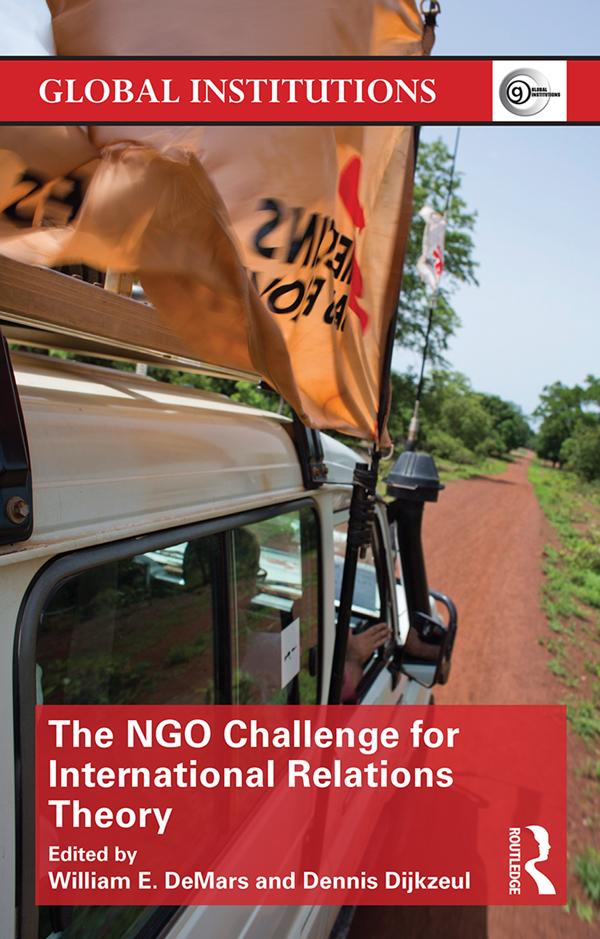
It has become commonplace to observe the growing pervasiveness and impact of Non-Governmental Organizations (NGOs). And yet the three central approaches in International Relations (IR) theory, Liberalism, Realism and Constructivism, overlook or ignore the importance of NGOs, both theoretically and politically.
Offering a timely reappraisal of NGOs, and a parallel reappraisal of theory in IR—the academic discipline entrusted with revealing and explaining world politics, this book uses practice theory, global governance, and new institutionalism to theorize NGO accountability and analyze the history of NGOs. This study uses evidence from empirical data from Europe, Africa, Latin America, the Middle East and Asia and from studies that range across the issue-areas of peacebuilding, ethnic reconciliation, and labor rights to show IR theory has often prejudged and misread the agency of NGOs.
Drawing together a group of leading international relations theorists, this book explores the frontiers of new research on the role of such forces in world politics and is required reading for students, NGO activists, and policy-makers.
Pay easily by card, Klarna, Apple Pay or Google Pay. Not happy? You always have a 14-day money-back guarantee. Read more in our terms. If you have any questions, email us at hello@memmo.org.
Memmo makes studying easier – wherever you are in the world. We bring your course books and smart study tools together in one place: summaries, quizzes, podcasts and flashcards. Plus Ted, your study buddy who answers anything you wonder. Over 50,000 students already study here – built to help you learn faster and stress less.