
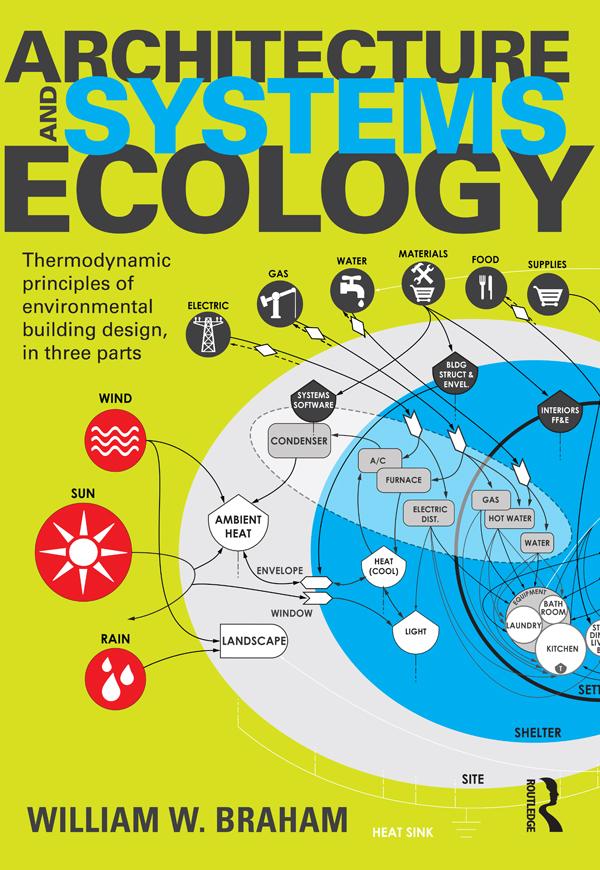
Modern buildings are both wasteful machines that can be made more efficient and instruments of the massive, metropolitan system engendered by the power of high-quality fuels. A comprehensive method of environmental design must reconcile the techniques of efficient building design with the radical urban and economic reorganization that we face. Over the coming century, we will be challenged to return to the renewable resource base of the eighteenth-century city with the knowledge, technologies, and expectations of the twenty-first-century metropolis.
This book explores the architectural implications of systems ecology, which extends the principles of thermodynamics from the nineteenth-century focus on more efficient machinery to the contemporary concern with the resilient self-organization of ecosystems.
Written with enough technical material to explain the methods, it does not include in-text equations or calculations, relying instead on the energy system diagrams to convey the argument. Architecture and Systems Ecology has minimal technical jargon and an emphasis on intelligible design conclusions, making it suitable for architecture students and professionals who are engaged with the fundamental issues faced by sustainable design.
The energy systems language provides a holistic context for the many kinds of performance already evaluated in architecture—from energy use to material selection and even the choice of building style. It establishes the foundation for environmental principles of design that embrace the full complexity of our current situation. Architecture succeeds best when it helps shape, accommodate, and represent new ways of living together.
Pay easily by card, Klarna, Apple Pay or Google Pay. Not happy? You always have a 14-day money-back guarantee. Read more in our terms. If you have any questions, email us at hello@memmo.org.
Memmo makes studying easier – wherever you are in the world. We bring your course books and smart study tools together in one place: summaries, quizzes, podcasts and flashcards. Plus Ted, your study buddy who answers anything you wonder. Over 75,000 students already study here – built to help you learn faster and stress less.