
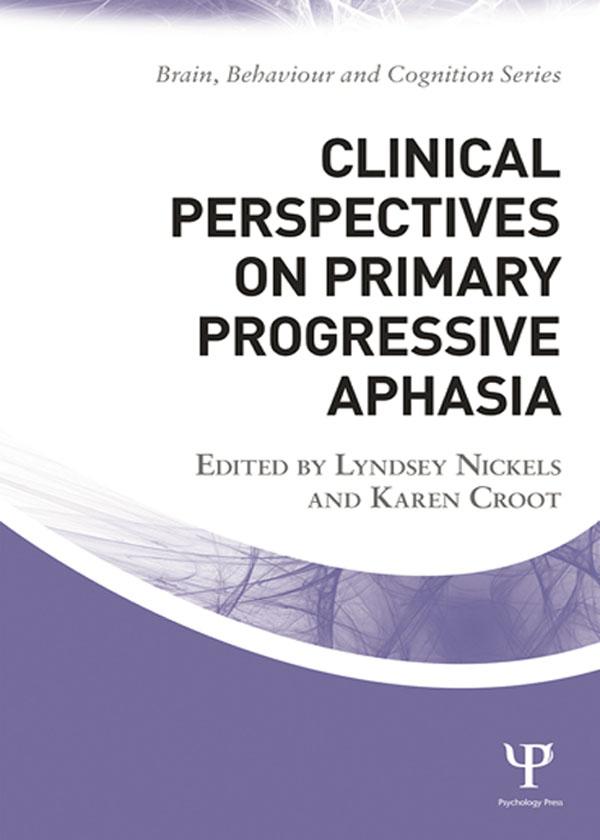
Primary progressive aphasia is a type of dementia that progressively impairs language abilities (speaking, understanding, reading and writing) and may eventually affect other aspects of thinking, movement and/or personality. For the person with primary progressive aphasia, these problems have a profound effect on their ability to communicate, which in turn impacts their relationships, social networks and ability to participate in everyday activities that depend on communication. Recent understanding of primary progressive aphasia has grown enormously, however, and this book provides an up-to-date survey of research relevant to the clinical care of people with primary progressive aphasia. It covers initial diagnosis, neuropathology, genetics and typical patterns of progression from early- to late-stage disease, with a special focus on management and intervention for a range of different language symptoms and everyday communication activities.
This book is suitable for a wide readership, from neurologists, geriatricians and other medical specialists, to general practitioners, speech and language therapists, occupational therapists, psychologists and students in these fields. It was originally published as a special issue of the journal Aphasiology.
Pay easily by card, Klarna, Apple Pay or Google Pay. Not happy? You always have a 14-day money-back guarantee. Read more in our terms. If you have any questions, email us at hello@memmo.org.
Memmo makes studying easier – wherever you are in the world. We bring your course books and smart study tools together in one place: summaries, quizzes, podcasts and flashcards. Plus Ted, your study buddy who answers anything you wonder. Over 50,000 students already study here – built to help you learn faster and stress less.